In certain regions and periods of antiquity, silver coins were cut into smaller pieces. To date, I know of only one cut-off fragment of a pre-Hellenistic coin from Cilicia Trachea: a fragment of a stater of Type 2.3b–c (c. 450–405 BC) from Kelenderis (Figure 1):
| Weight: | 3.66 g |
| Diameter: | 18.2 mm |
| Reference: | Bucephalus Numismatic GmbH, Black Auction 36 (5 April 2024), Lot 354 (acsearch.info URL). |
The weight of this fragment suggests that it may have functioned as a third stater. Although it is 0.02 g heavier than the heaviest third stater in the coin corpus, Ref. No. KE4029 (3.64 g), and 0.16 g heavier than both the median and average weights of this denomination (see Table 3 in its weight analysis), this slightly higher weight could be attributed to imprecision in the cutting process. However, the fragment may only coincidentally weigh approximately one-third of a stater. It is therefore useful to analyse fragments of staters from mints in the neighbouring regions of Cilicia Pedias and Pamphylia as well. To date, I have collected data on eight such specimens:
| Cilicia, Soloi, c. 440–410 BC, Figure 2 | |
| Weight: | 7.93 g |
| Diameter: | 15 mm |
| Type: | Satyr in kneeling-running stance right / Bunch of grapes within an incuse square. (unpublished in the standard references) |
| Reference: | Classical Numismatic Group, Electronic Auction 400 (28 June 2017), Lot 298 (acsearch.info URL). |
| Note: | Only one other specimen is known, and it is complete: Nomos AG, Auction 33 (9 July 2024), Lot 1420 (acsearch.info URL). |
| Cilicia, Soloi, c. 410–375 BC, Figure 3 | |
| Weight: | 4.88 g |
| Diameter: | 21 mm |
| Type: | Helmeted head of Athena right / Bunch of grapes within an incuse square. (Casabonne 2004, p. 119, Series 4; SNG France 2, 168–9) |
| Reference: | Savoca Coins, 222nd Weekly Blue Auction (13 July 2024), Lot 476 (biddr.com URL). Ex Biga Numismatics, Online Auction 13 (13 November 2022), Lot 149 (acsearch.info URL). |
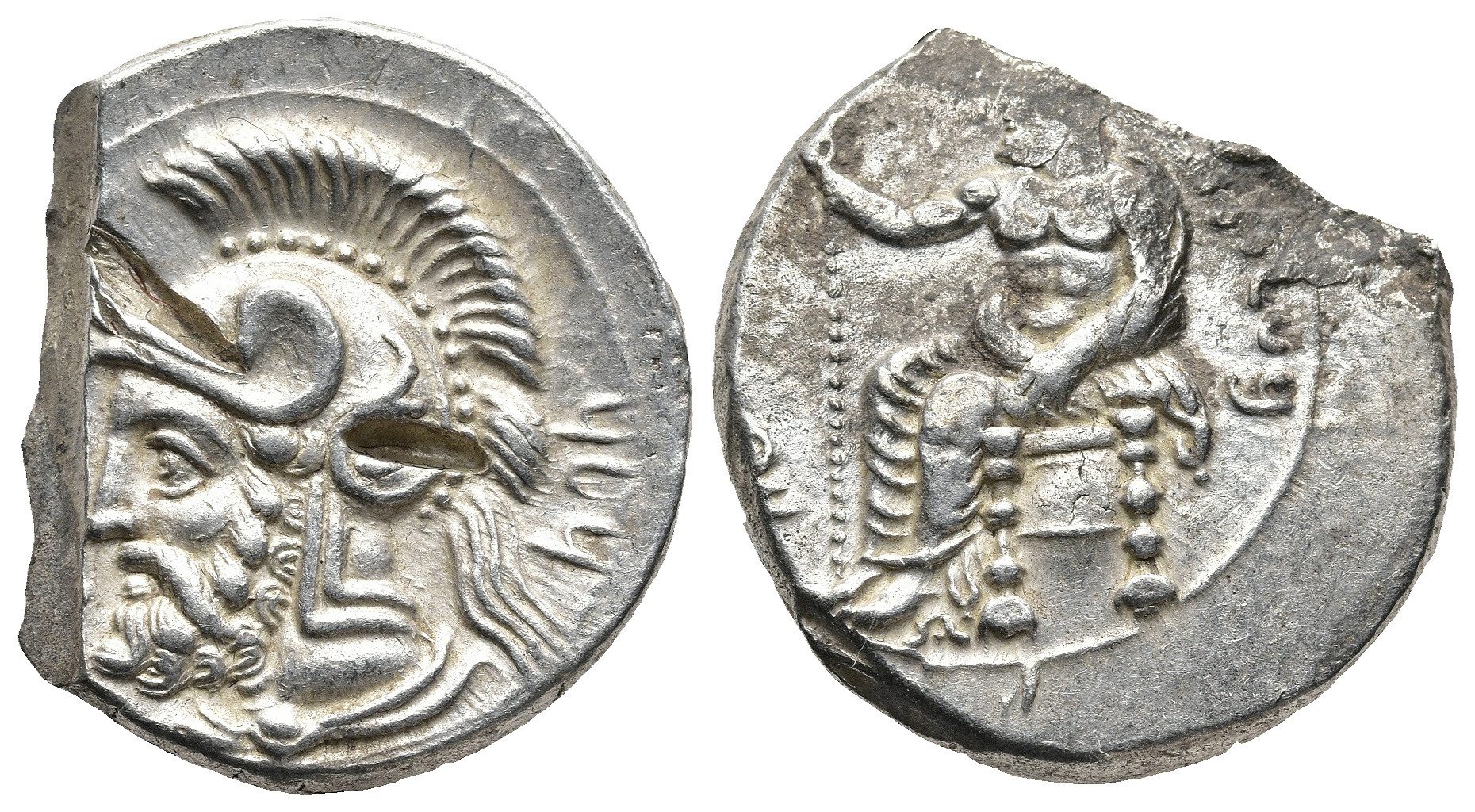
| Cilicia, Tarsos, Pharnabazos, c. 380–374/3 BC, Figure 4 | |
| Weight: | 4.87 g |
| Diameter: | 22 mm |
| Type: | Baaltars seated left on throne / Bearded male head left, wearing crested helmet. (SNG France 2, 251–6) |
| Reference: | Roma Numismatics Limited, E-Sale 116 (18 January 2024), Lot 331 (acsearch.info URL). |
| Cilicia, Tarsos, Pharnabazos, c. 380–374/3 BC, Figure 5 | |
| Weight: | 9.78 g |
| Diameter: | 22 mm |
| Type: | Baaltars seated left on throne / Bearded male head left, wearing crested helmet. (SNG France 2, 251–6) |
| Reference: | Ancient Numismatics Auctions (formerly Aquila Numismatics), Auction 17 (25 January 2025), Lot 406 (acsearch.info URL). |
| Cilicia, Tarsos, Datames (Tarkumuwa), c. 384–361/0 BC, Figure 6 | |
| Weight: | 5.47 g |
| Diameter: | 22 mm |
| Type: | Baaltars seated right on throne / Ana standing right, extending hand and pointing at the head of Tarkumuwa, standing left, right hand raised; between them, thymiaterion. (SNG France 2, 290–300) |
| Reference: | DEMOS Auctions, Auction 68 (17 April 2026), Lot 937 (acsearch.info URL). |
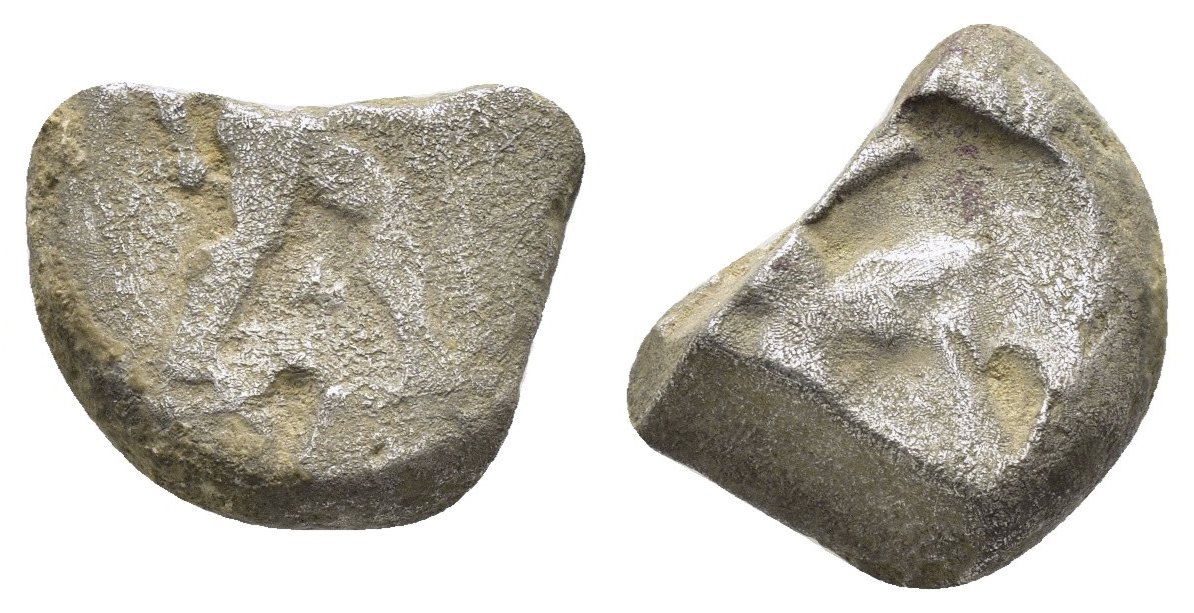
| Pamphylia, Aspendos, c. 465–430 BC, Figure 7 | |
| Weight: | 5.80 g |
| Diameter: | 11 mm |
| Type: | Warrior advancing right, holding shield and spear / Triskeles within incuse square. (SNG France 3, 1–13) |
| Reference: | Biga Numismatics, Online Auction 33 (14–15 September 2024), Lot 339 (biddr.com URL). |
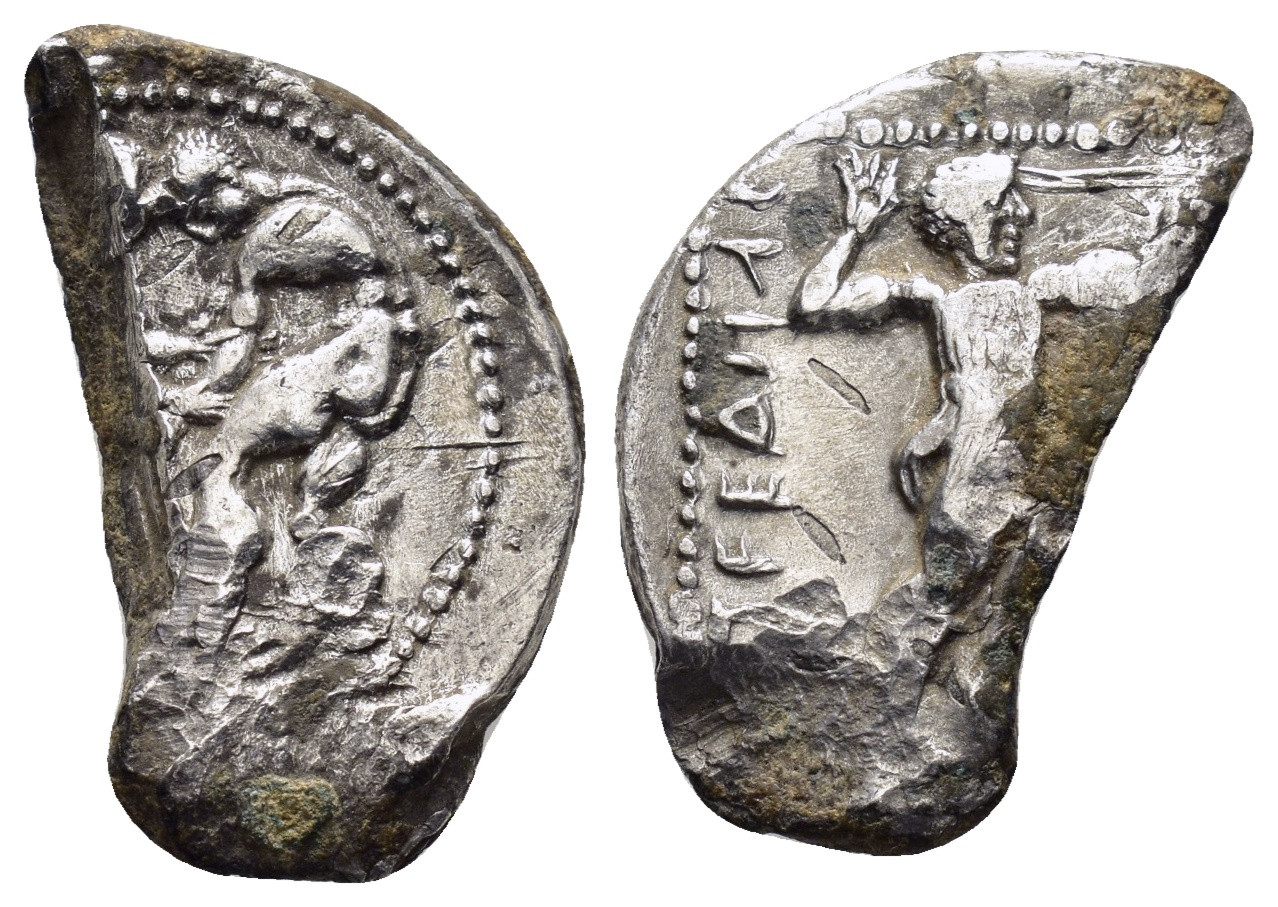
| Pamphylia, Aspendos, c. 380/75–330/25 BC, Figure 8 | |
| Weight: | 5.68 g |
| Diameter: | 14 mm |
| Type: | Two wrestlers / Slinger. (Tekin 1997, Series 4) |
| Reference: | Biga Numismatics, Online Auction 30 (14 April 2024), Lot 198 (acsearch.info URL). |
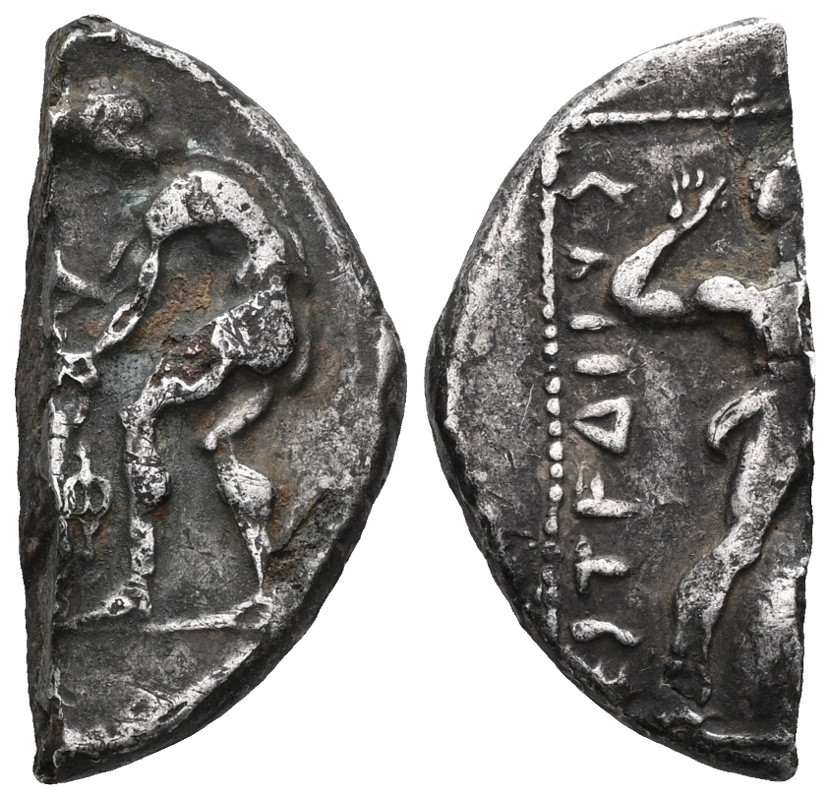
| Pamphylia, Aspendos, c. 380/75–330/25 BC, Figure 9 | |
| Weight: | 4.3 g (reported to the nearest 0.1 g) |
| Diameter: | 22.6 mm |
| Type: | Two wrestlers / Slinger. (Tekin 1997, Series 4) |
| Reference: | Bay Numismatics B.V. (Schiedam, Netherlands), Online Auction 7 (1 November 2024), Lot 88 (biddr.com URL). |
Table 1 compares the weights of the fragments described above with the average weights of staters of the corresponding types. The average weight for Kelenderis Type 2.3 is taken from the weight analysis of Kelenderis staters (see Table 2 in that analysis), while the averages for Tarsos and Aspendos are taken from the comparative weight analysis of these mints (see Table 3 in that analysis). For the first Soloi fragment, the weight of the only known complete specimen of the type is used in place of an average (see above for the reference). No average is given for the second Soloi fragment because this type is not yet included in the comparative corpus on this website (Coin Corpus / Mints outside Cilicia Trachea).
| Fragment | Weight | Average weight of staters | Ratio |
|---|---|---|---|
| Kelenderis | 3.66 g | 10.76 g | 34% |
| Soloi 1 | 7.93 g | 10.75 g | 74% |
| Soloi 2 | 4.88 g | ||
| Tarsos 1 | 4.87 g | 10.52 g | 46% |
| Tarsos 2 | 9.78 g | 93% | |
| Tarsos 3 | 5.47 g | 10.43 g | 52% |
| Aspendos 1 | 5.80 g | 10.88 g | 53% |
| Aspendos 2 | 5.68 g | 10.74 g | 53% |
| Aspendos 3 | 4.3 g | 40% |
Table 1: Comparison of fragment weights with average stater weights
As the last column shows, the first and third Tarsos fragments and the first two Aspendos fragments weigh approximately half a stater, while the first Soloi fragment weighs approximately three-quarters of a stater. Half a stater was equivalent to 6 obols, and three-quarters of a stater to 9 obols. Like the Kelenderis fragment, these fractions could therefore have served as substitutes for combinations of lower denominations under the applicable weight standard. The second Tarsos fragment would correspond to approximately 11 obols (11/12 = 92% of the weight of an average stater), and the third Aspendos fragment to approximately 5 obols (5/12 = 42% of the weight of an average stater). However, it is very unlikely that coins were deliberately cut to produce such specific equivalents in obols. Nevertheless, these fragments may have served as substitutes for lower denominations in areas using a different weight standard.
Alternatively, some or all of these fragments may have been cut not as substitutes for unavailable lower denominations but to obtain silver of a required weight (“hacksilber”) for transactions in which payment in coin was not required. In such a case, a relatively large piece may first have been cut from a coin and then adjusted to the required weight, either by trimming it further or by adding smaller fragments.
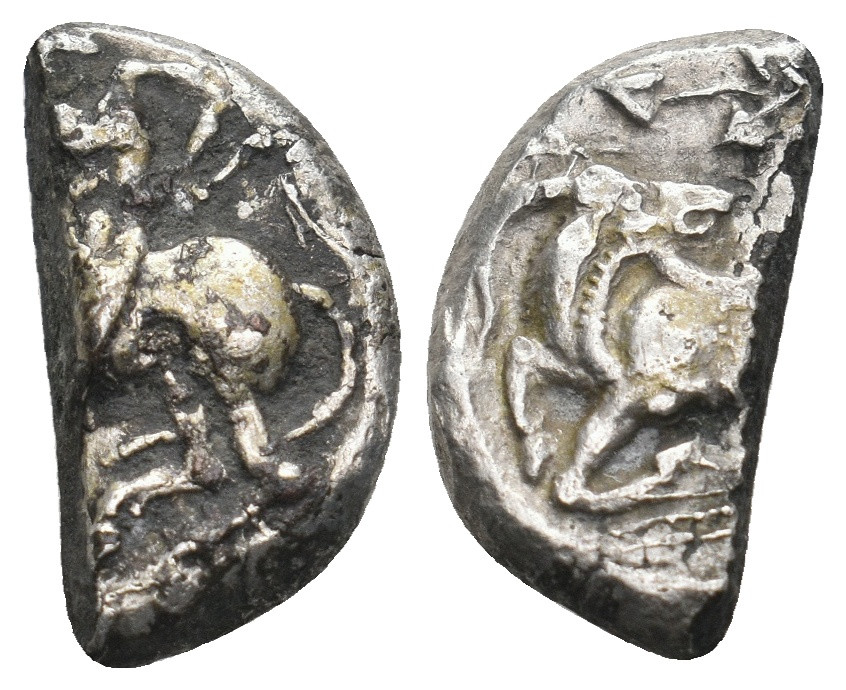
| Figure 1. Cilicia, Kelenderis, AR Stater, c. 450–405 BC. |
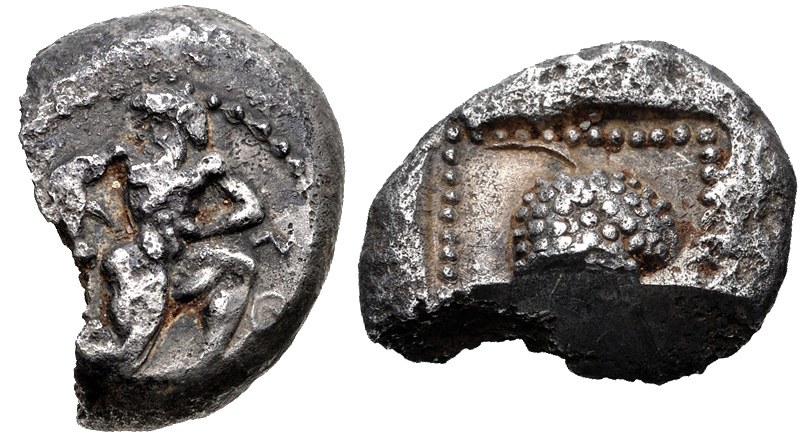
| Figure 2. Cilicia, Soloi, AR Stater, c. 440–410 BC. |
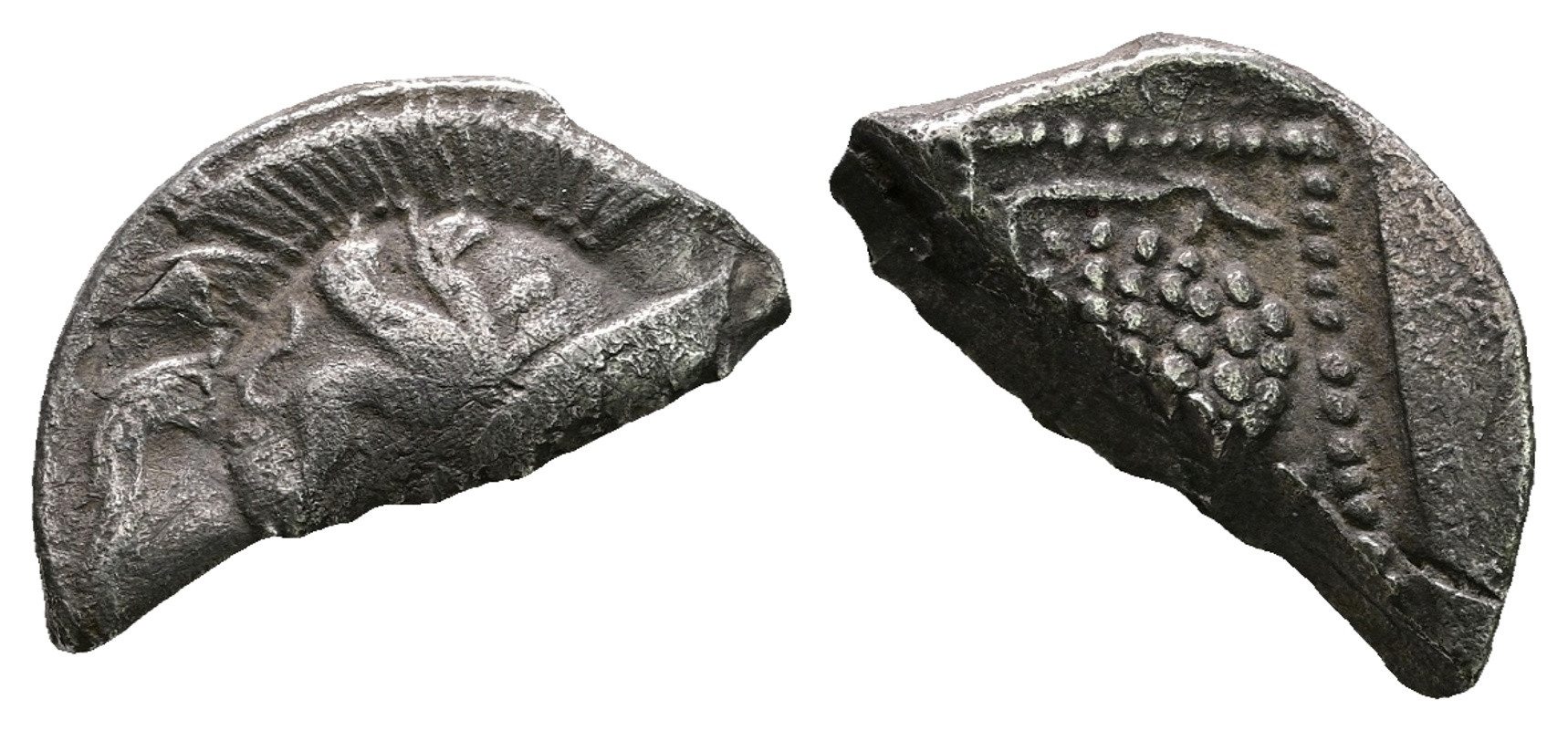
| Figure 3. Cilicia, Soloi, AR Stater, c. 410–375 BC. |
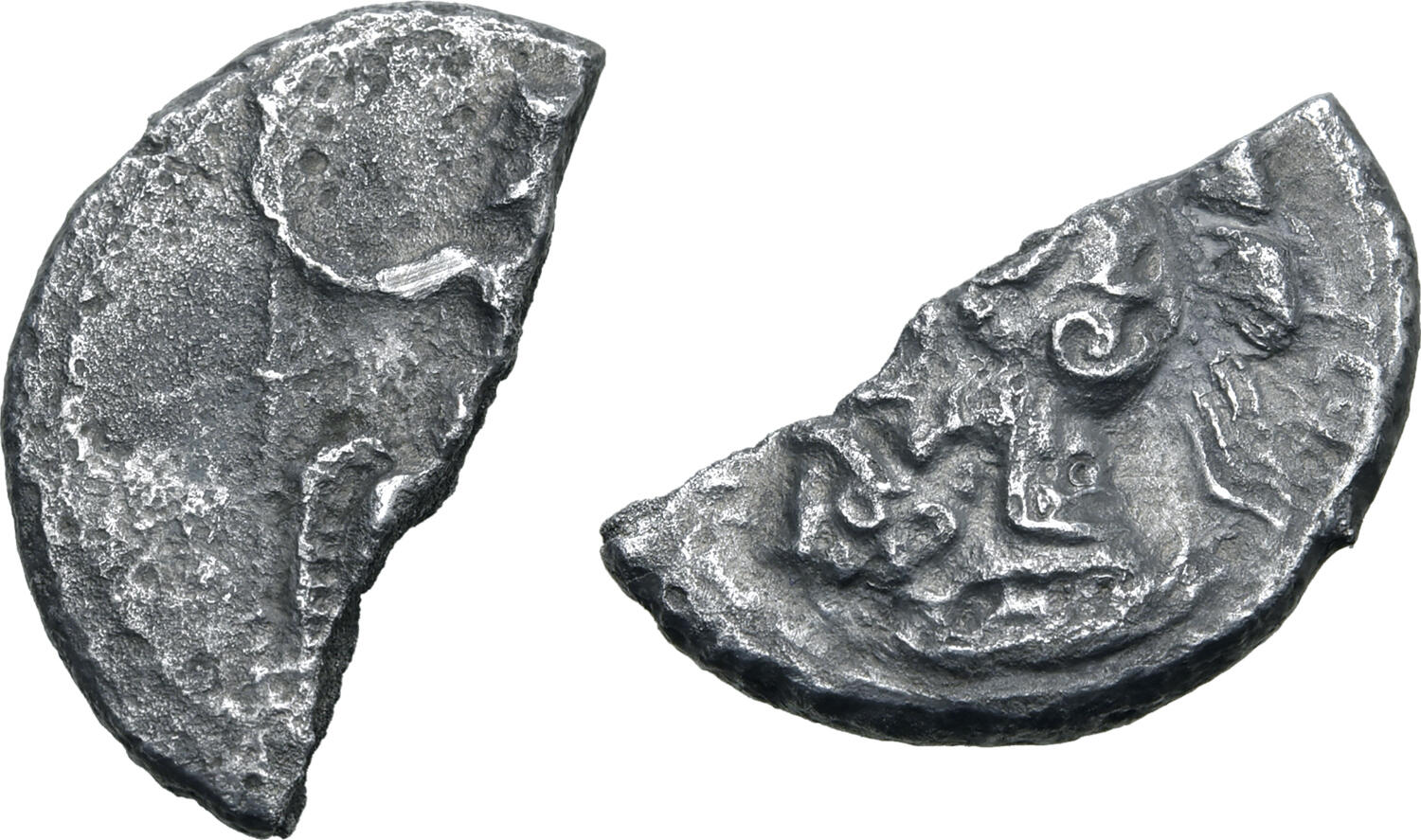
| Figure 4. Cilicia, Tarsos, Pharnabazos, AR Stater, c. 380–374/3 BC. |
| Figure 5. Cilicia, Tarsos, Pharnabazos, AR Stater, c. 380–374/3 BC. |
| Figure 6. Cilicia, Tarsos, Datames (Tarkumuwa), AR Stater, c. 384–361/0 BC. |
| Figure 7. Pamphylia, Aspendos, AR Stater, c. 465–430 BC. |
| Figure 8. Pamphylia, Aspendos, AR Stater, c. 380/75–330/25 BC. |
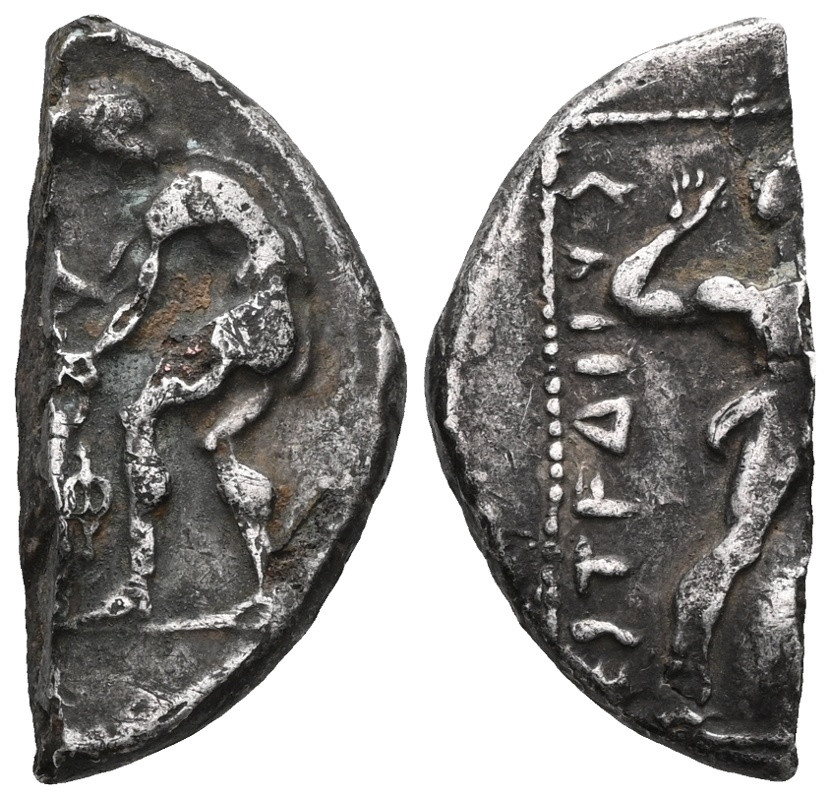
| Figure 9. Pamphylia, Aspendos, AR Stater, c. 380/75–330/25 BC. |
| Credits: | |
| Figure 1: | Bucephalus Numismatic GmbH, Black Auction 36 (5 April 2024), Lot 354 (acsearch.info URL). |
| Figure 2: | Classical Numismatic Group, Electronic Auction 400 (28 June 2017), Lot 298 (acsearch.info URL). |
| Figure 3: | Savoca Coins, 222nd Weekly Blue Auction (13 July 2024), Lot 476 (biddr.com URL). |
| Figure 4: | Roma Numismatics Limited, E-Sale 116 (18 January 2024), Lot 331 (acsearch.info URL). |
| Figure 5: | Ancient Numismatics Auctions (formerly Aquila Numismatics), Auction 17 (25 January 2025), Lot 406 (acsearch.info URL). |
| Figure 6: | DEMOS Auctions, Auction 68 (17 April 2026), Lot 937 (acsearch.info URL). |
| Figure 7: | Biga Numismatics, Online Auction 33 (14–15 September 2024), Lot 339 (biddr.com URL). |
| Figure 8: | Biga Numismatics, Online Auction 30 (14 April 2024), Lot 198 (acsearch.info URL). |
| Figure 9: | Bay Numismatics B.V. (Schiedam, Netherlands), Online Auction 7 (1 November 2024), Lot 88 (biddr.com URL). |
9 July 2024 – 5 September 2026