At Antique Arena Inc.’s Fine Art and Antique Estate Auction 164 (USA), held on 29 June 2024, a gold ornament or appliqué was offered as Lot 296 (Figure 1). This thin, circular gold object has four holes around its edge, probably intended to attach it to a backing, most likely made of fabric, leather, or wood. The auction catalogue gives an approximate weight of 1 g and diameter of 1 inch (25.4 mm). The kneeling goat and the inscription KEΛEN on the small gold plate appear to have been created by impressing the reverse of a Kelenderis stater into it. On its outer, relief-bearing side, the goat kneels right. The coin used as the matrix therefore belonged to Type 2.12 or one of Types 3.7–3.17. Judging by the depiction of the goat, the matrix was most likely a coin representing a variant of one of Types 3.7, 3.8, 3.15, or 3.16.
At the same auction, a similar small gold plate weighing approximately 1.6 g and measuring approximately 1 1/8 inches (28.6 mm) in diameter was offered as Lot 295 (Figure 2). Whereas both sides of Lot 296 are shown in the auction catalogue, only one side of Lot 295 is shown, in two photographs. The matrix cannot be identified as confidently as in the case of the Kelenderis stater, but it appears to have been a silver tetradrachm of Maroneia in Thrace or of the island of Thasos. These tetradrachms were minted during the 2nd and 1st centuries BC. Their obverses depict the head of a young Dionysos wearing an ivy wreath, his long hair tied in a knot at the back. Tetradrachms of Maroneia and their Celtic imitations depict Dionysos standing half-left and holding grapes and narthex stalks on the reverse (BMC 3, pp. 128–129, 48–64; SNG Copenhagen 6, 637–639 and 640–642), whereas those of Thasos and their Celtic imitations depict the young, nude Heracles standing with a lion skin over his left arm and a club in his right hand (BMC 3, pp. 222–224, 67–89; SNG Copenhagen 7, 1038–1049). The long, thick, wavy curls falling onto Dionysos’ neck on the gold plate resemble those on the specimen offered by CGB as Lot 32 in MONNAIES 26 (22 June 2006; Figure 3). This coin may be an issue of Thasos or a Celtic imitation, many of which were struck in the Lower Danube region and vary considerably in quality.
Another small gold plate bearing a coin impression and perforated for attachment appeared as Lot 198 in Auction 403, held by Gerhard Hirsch Nachfolger on 10 February 2026 (Figure 4). A silver stater of Phaselis dating to c. 167–130 BC served as the matrix (Waddington 1898, 3154; Figure 5).
Thin gold foils bearing coin impressions and resembling bracteates were sometimes placed in graves instead of real coins as Charon’s obols (Fischer-Bossert 2009, pp. 123–124). These so-called “ghost coins”, however, lacked holes for attachment, unlike the three objects discussed here. Although these objects may have served as grave goods, they were more likely decorative fittings, perhaps attached to clothing or horse harnesses, or votive offerings affixed within a temple.
Whatever purpose these objects served, the Kelenderis stater used as the matrix for the gold plate in Figure 1 was minted roughly two centuries before the coins used as matrices for the other two gold plates in Figures 2 and 4. It therefore seems unlikely that all three objects were made at approximately the same time, since this would require someone to have retained such a Kelenderis stater until the 2nd or 1st century BC, although this possibility cannot be ruled out. In any case, unless it is a modern forgery, the gold plate attests to the visual appeal of Kelenderis staters.
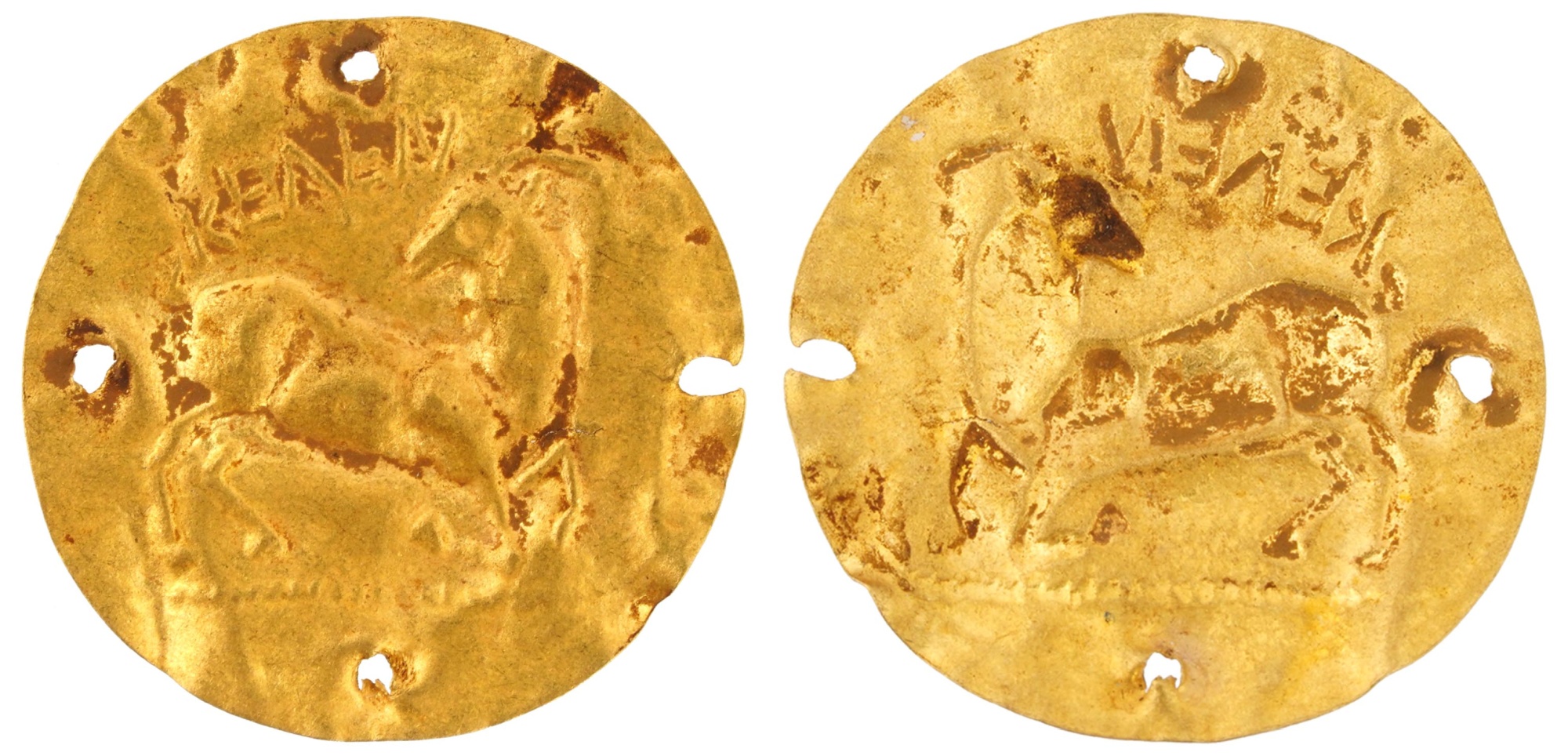
Figure 1. Gold-sheet ornament or appliqué; weight approx. 1 g, diameter approx. 1 in. (25.4 mm).
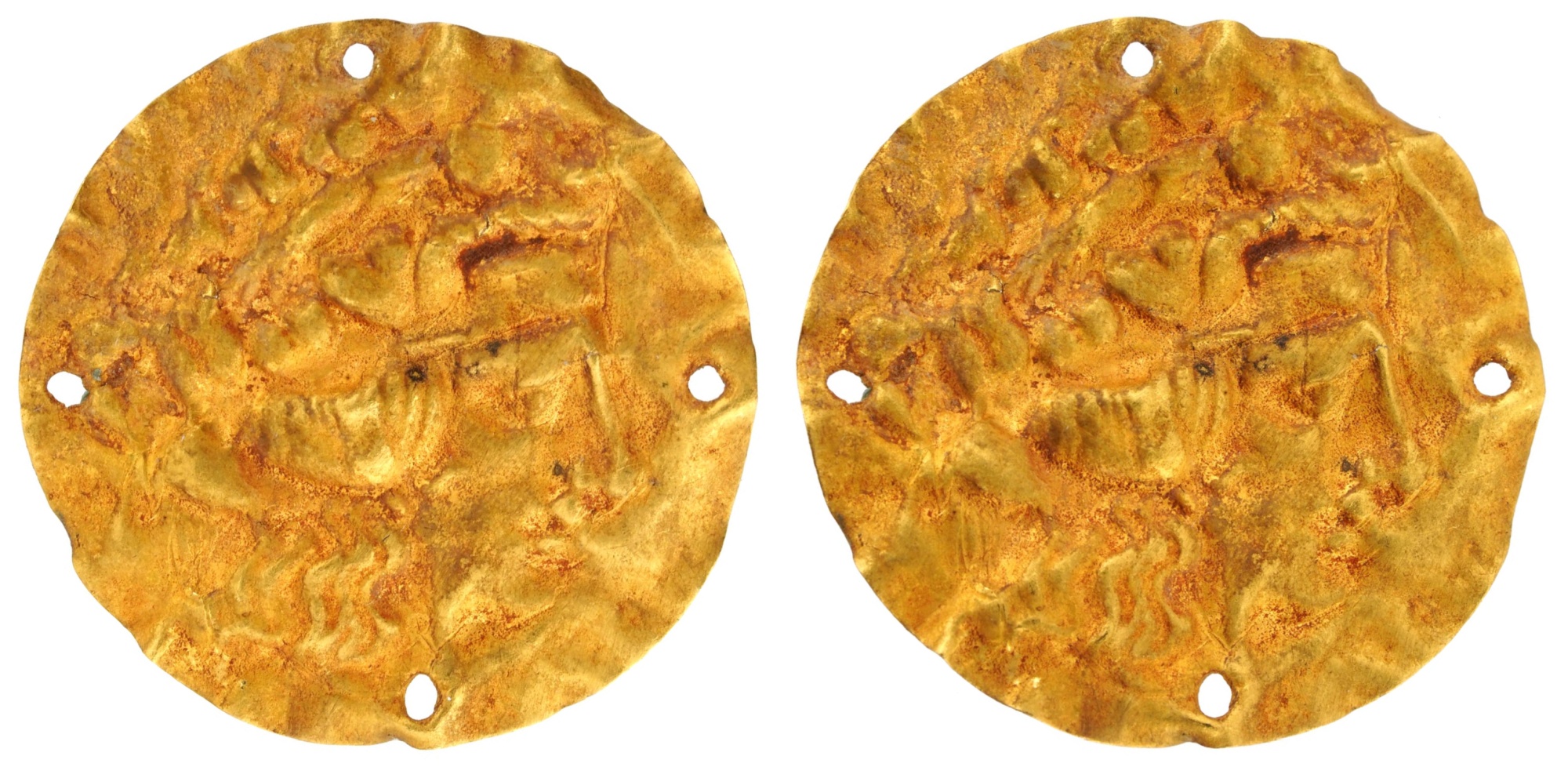
Figure 2. Gold-sheet ornament or appliqué; weight approx. 1.6 g, diameter approx. 1 1/8 in. (28.6 mm).
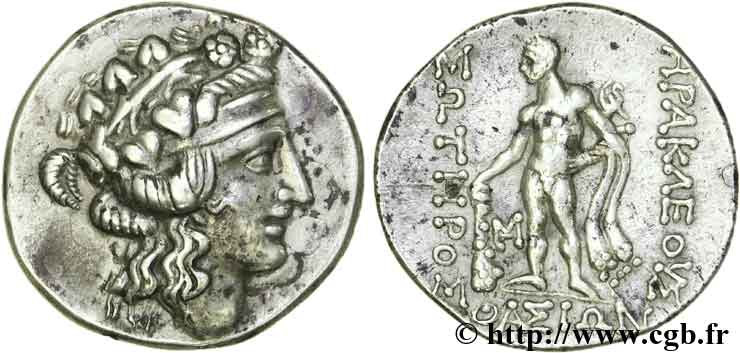
Figure 3. Thasos, Islands off Thrace; possibly a Celtic imitation. Weight 16.34 g, diameter 28 mm.
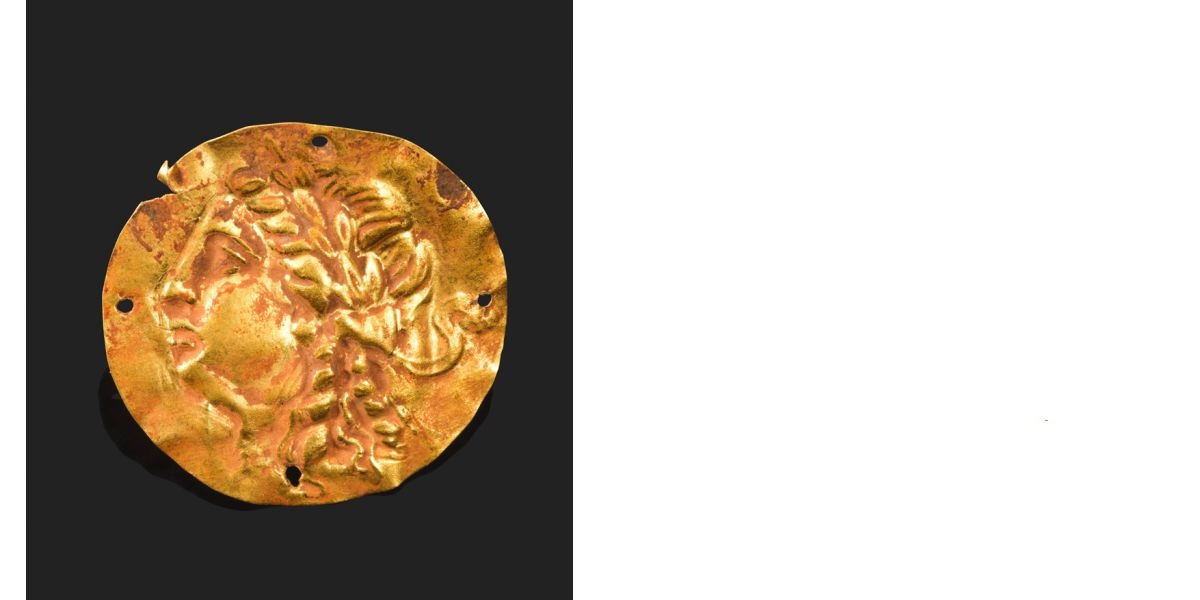
Figure 4. Gold-sheet ornament or appliqué; weight 1.58 g, diameter 29 mm.
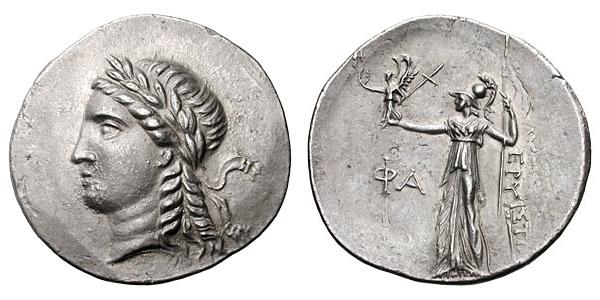
Figure 5. Lycia. Phaselis. Weight 16.82 g, diameter not stated.
| Credits: | |
| Figure 1: | Antique Arena Inc. (USA), Fine Art and Antique Estate Auction 164 (29 June 2024), Lot 296. |
| Figure 2: | Antique Arena Inc. (USA), Fine Art and Antique Estate Auction 164 (29 June 2024), Lot 295. |
| Figure 3: | CGB Numismatics Paris, MONNAIES 26 (22 June 2006), Lot 32 (acsearch.info URL). |
| Figure 4: | Gerhard Hirsch Nachfolger, Auction 403 (10 February 2026), Lot 198 (auction catalogue URL). |
| Figure 5: | Gemini, LLC, Auction IV (8 January 2008), Lot 206 (acsearch.info URL). |
10 January 2026 – 6 September 2026