Analysed coins Die analysis Visual catalogue
Analysed coins
| Coin catalogue section: | Kelenderis, Group 1 |
| Coin corpus dataset: | Kelenderis, Group 1 |
The number of analysed coins recorded in the corpus as of 9 May 2025 is presented in Table 1.
| Type | Count |
|---|---|
| 1.1 | 2 |
| 1.2 | 2 |
| 1.3a | 1 |
| 1.3b | 9 |
| Total | 14 |
Table 1: Number of analysed coins
Die analysis
An overview of the dies used to strike the known Group 1 staters is given in Table 2. Coins of Types 1.1 and 1.2 were struck from the same obverse die, O1. However, O1 appears in a more worn state on Type 1.2 coins, as shown by the wider vertical die crack in the right field, marked by purple ovals in the photographs below. Types 1.1 and 1.2 thus differ only in their reverse dies, R1 and R2, with Type 1.1 coins having been struck earlier than Type 1.2 coins.
Identifying the dies used for Type 1.3 coins is problematic. It appears that obverse die O2, used for the only known specimen of variant 1.3a, was also used for coins of variant 1.3b. However, this die was reworked twice, and the city ethnic was erased from it for an unknown reason. The photographs below highlight four diagnostic features supporting the identification of O2 on all coins of variant 1.3b:
- traces of the inscription and grooves along the outer edge of the die, below the inscription and to the right of the horse’s tail (red ovals);
- a die crack between the horse’s gaskin and tail (blue ovals);
- a die crack to the left of the horse’s muzzle (yellow ovals);
- long hair on the fetlock of the horse’s left hind leg (green ovals).
The first stage in the reworking of die O2, designated O2b, is found on all coins of variant 1.3b except specimen 8. The city ethnic in the exergue was erased; the rider’s left arm was thickened, causing the folds of the chlamys visible on the rider’s arm on the 1.3a coin to disappear; a clasp was added to the chlamys on the rider’s chest; the worn areas of the die were recut; and the die cracks were repaired. Specimen 4 represents an early state of the die after this reworking. Before specimen 8 was struck, O2b was probably modified again, producing state O2c: the rider’s left foot was turned to the left, the position of the horse’s right foreleg was changed, and the rider’s chest, left arm, chlamys, and whip were redesigned.
Four reverse dies were probably used for Type 1.3 coins (R3, R4, R5, and R6). However, the identification of the reverse dies used for specimens 2 and 9 is very uncertain.
| Type | Ref. No. | Specimen | Coin dies | |
|---|---|---|---|---|
| Obverse | Reverse | |||
| 1.1 | KE1001 | 1 | O1 | R1 |
| KE1002 | 2 | O1 | R1 | |
| 1.2 | KE1003 | 1 | O1 | R2 |
| KE1004 | 2 | O1 | R2 | |
| 1.3a | KE1005 | 1 | O2 | R3 |
| 1.3b | KE1006 | 1 | O2b | R5 |
| KE1007 | 2 | O2b | R5 (?) | |
| KE1008 | 3 | O2b | R5 | |
| KE1009 | 4 | O2b | R4 | |
| KE1010 | 5 | O2b | R4 | |
| KE1011 | 6 | O2b | R4 | |
| KE1012 | 7 | O2b | R4 | |
| KE1013 | 8 | O2c | R6 | |
| KE1014 | 9 | O2b | R4 (?) | |
Table 2: Overview of the dies used to strike individual coins
Visual catalogue
Photo credits are provided in the coin corpus dataset for Kelenderis, Group 1.

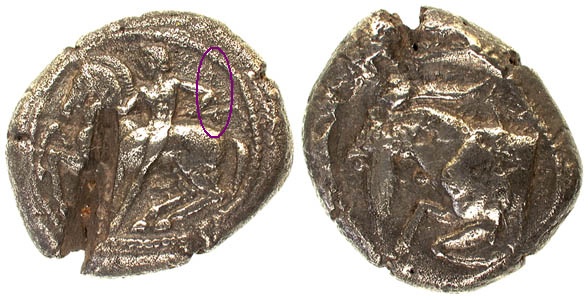
Type 1.1, Specimen 1 (Ref. No. KE1001). Obverse and reverse dies O1/R1.
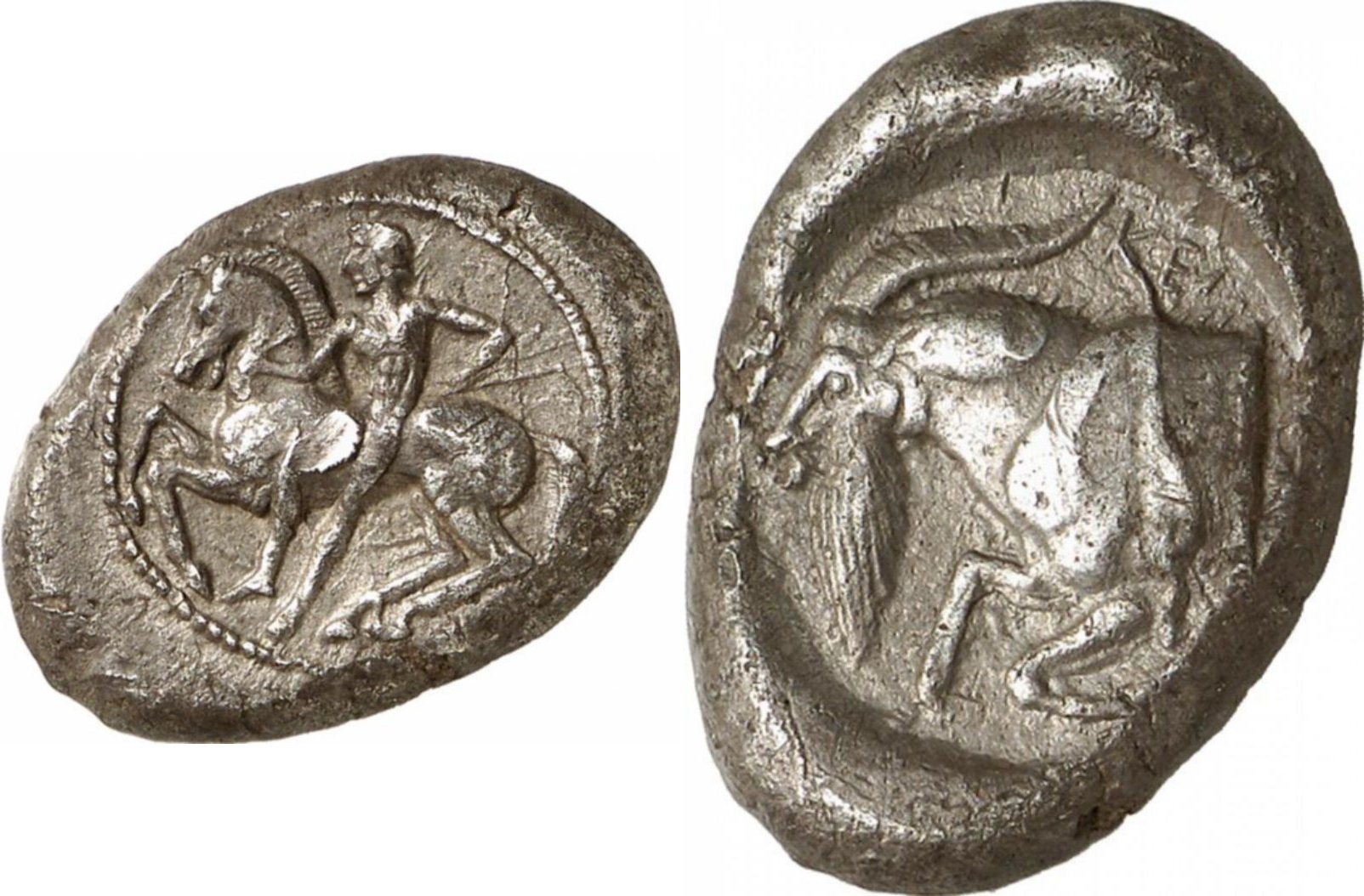
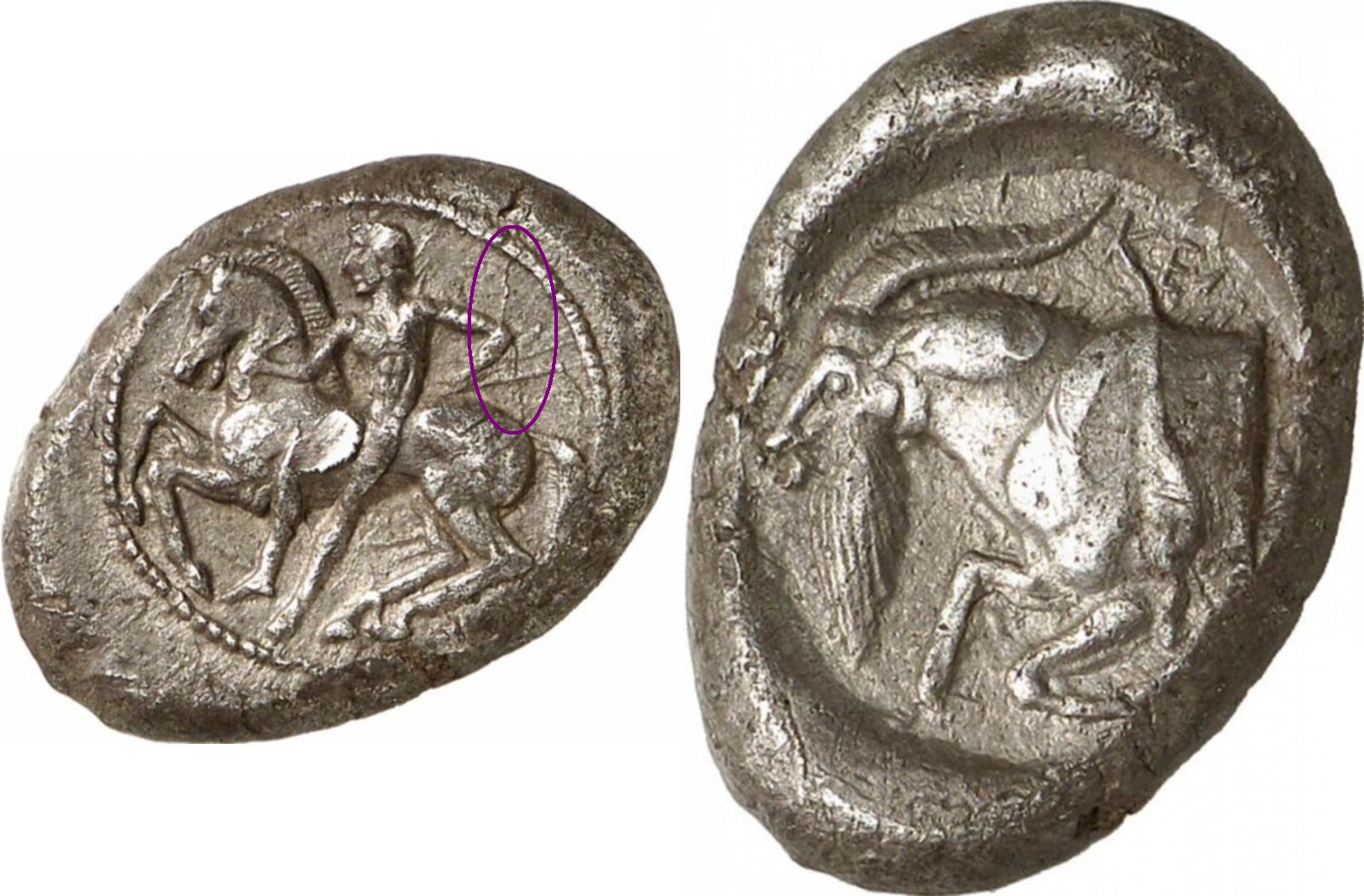
Type 1.1, Specimen 2 (Ref. No. KE1002). Obverse and reverse dies O1/R1.
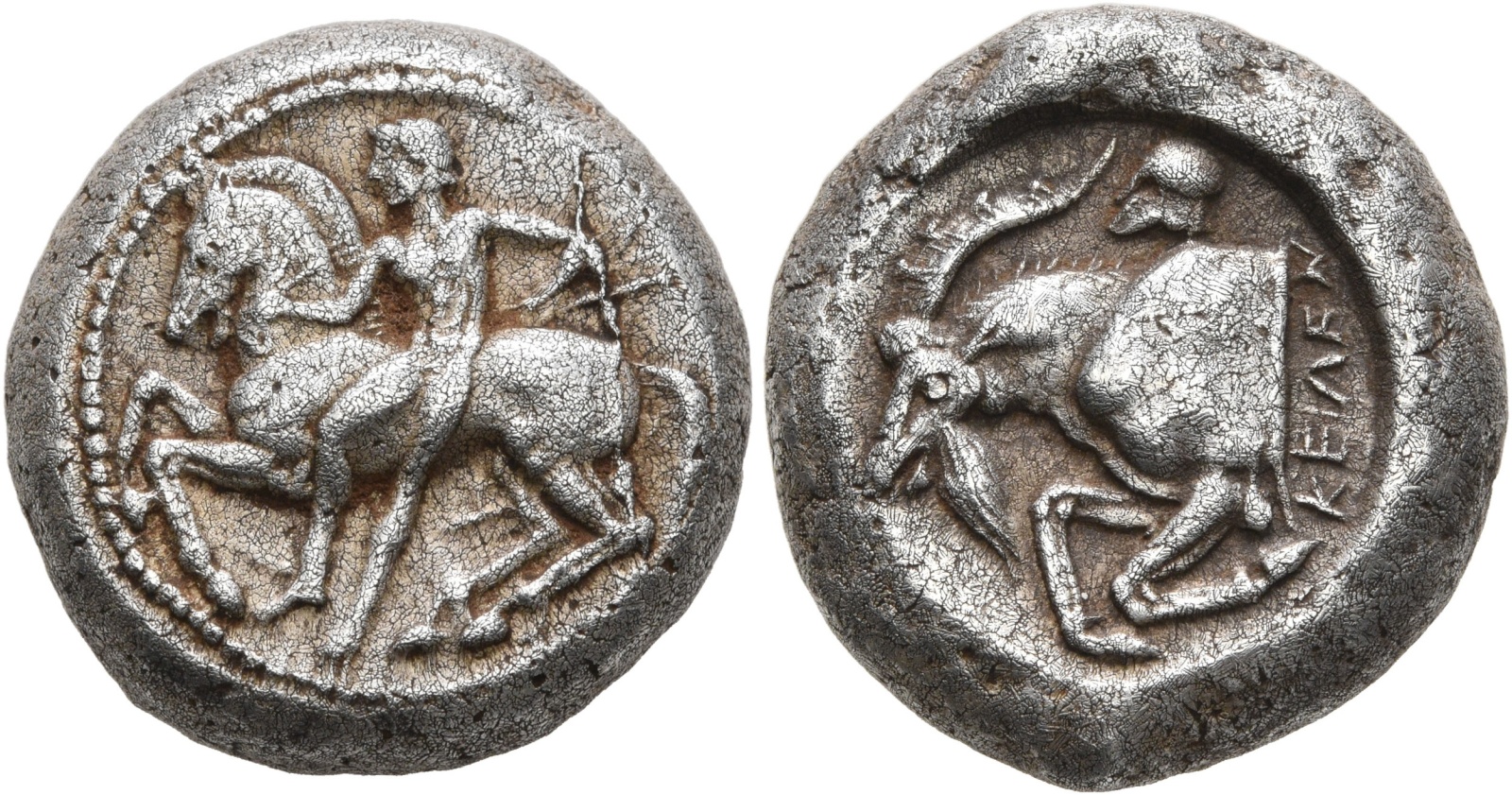

Type 1.2, Specimen 1 (Ref. No. KE1003). Obverse and reverse dies O1/R2.
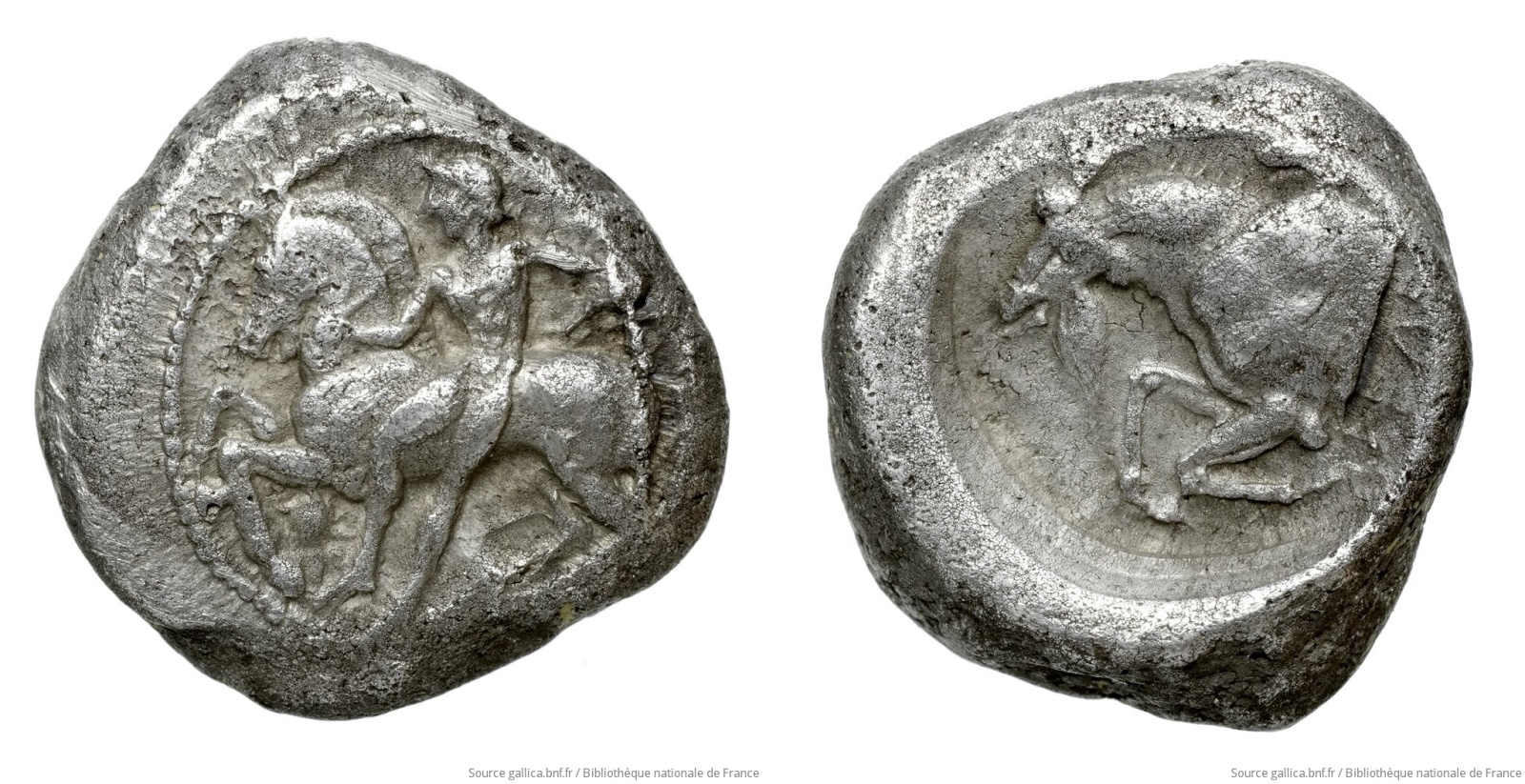
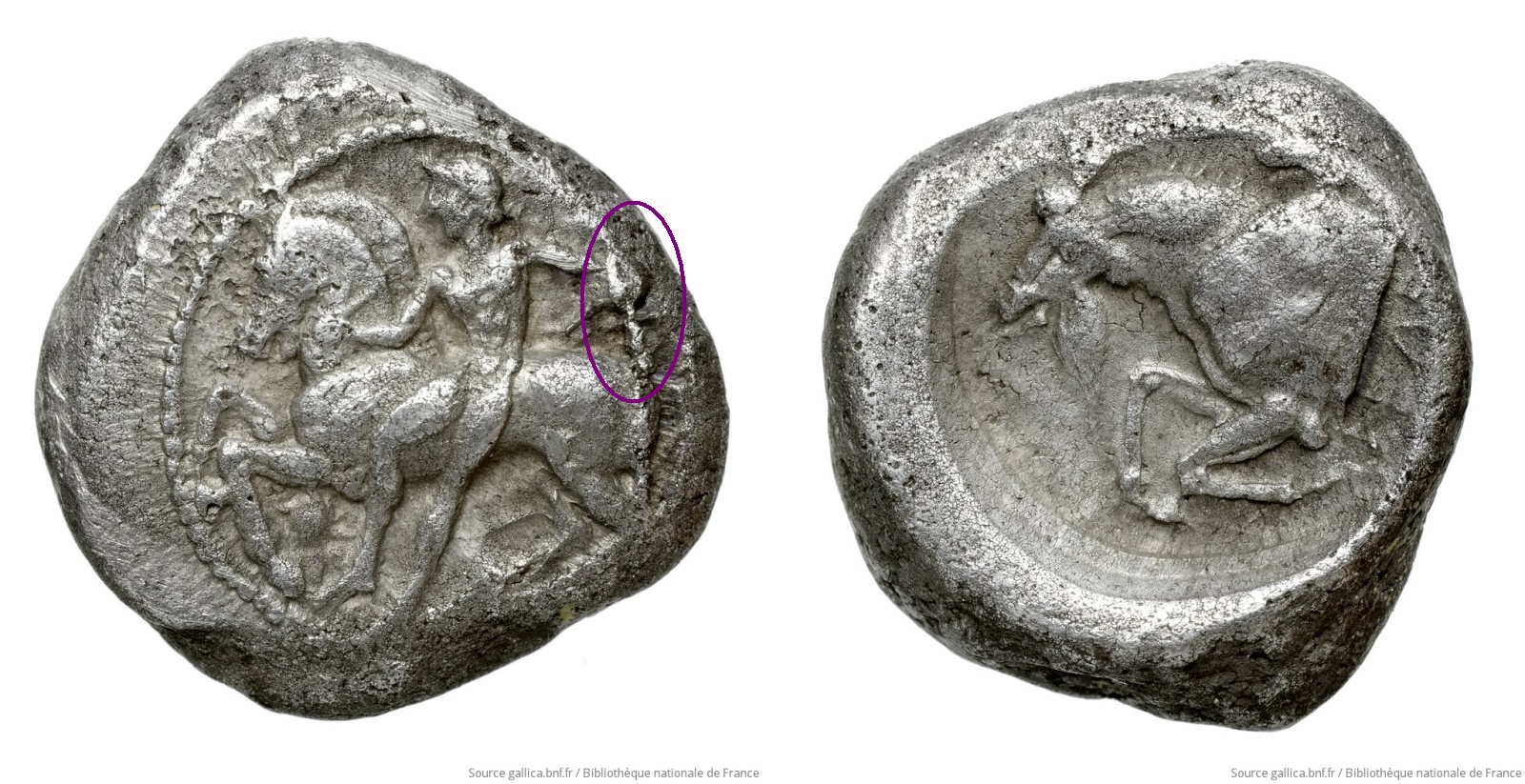
Type 1.2, Specimen 2 (Ref. No. KE1004). Obverse and reverse dies O1/R2.
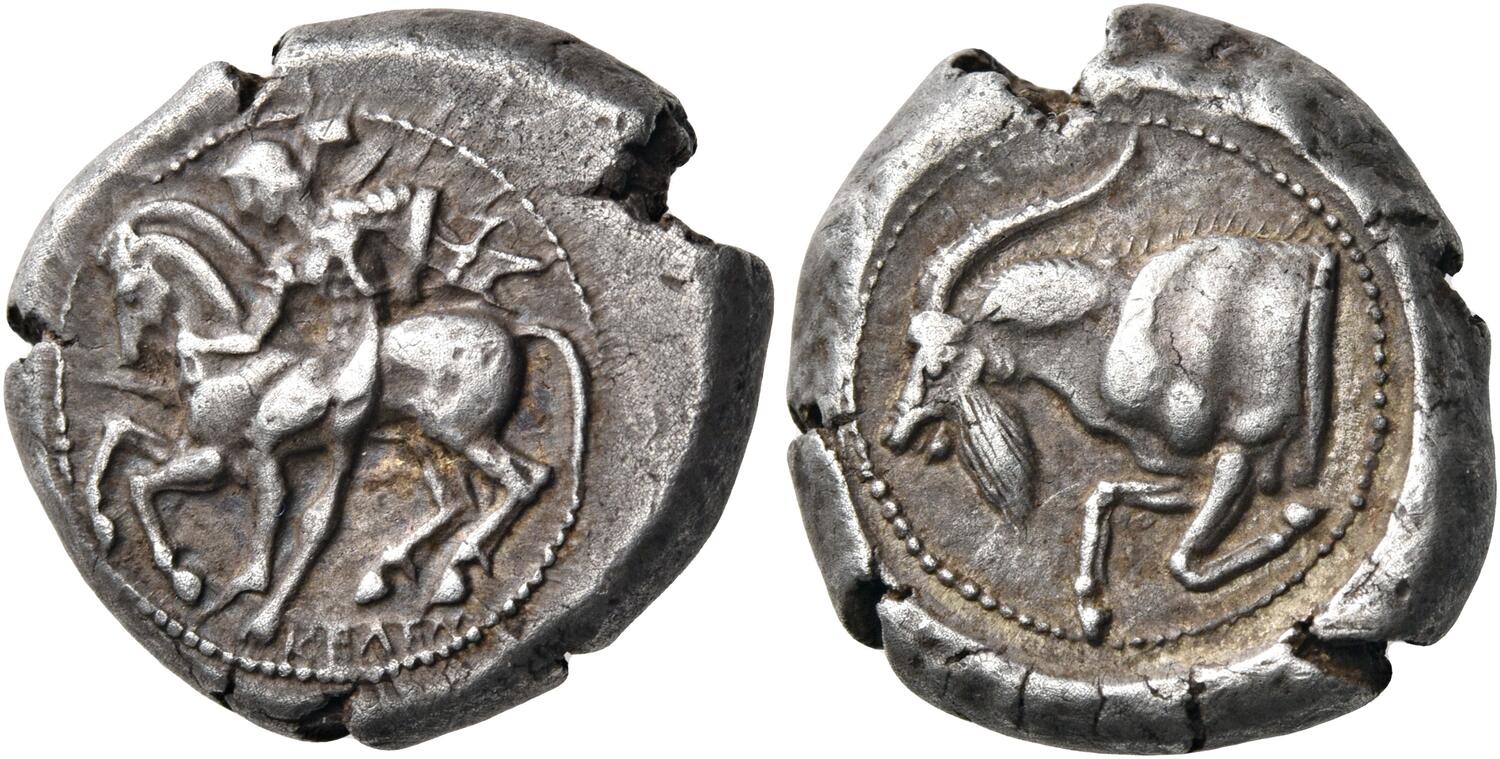
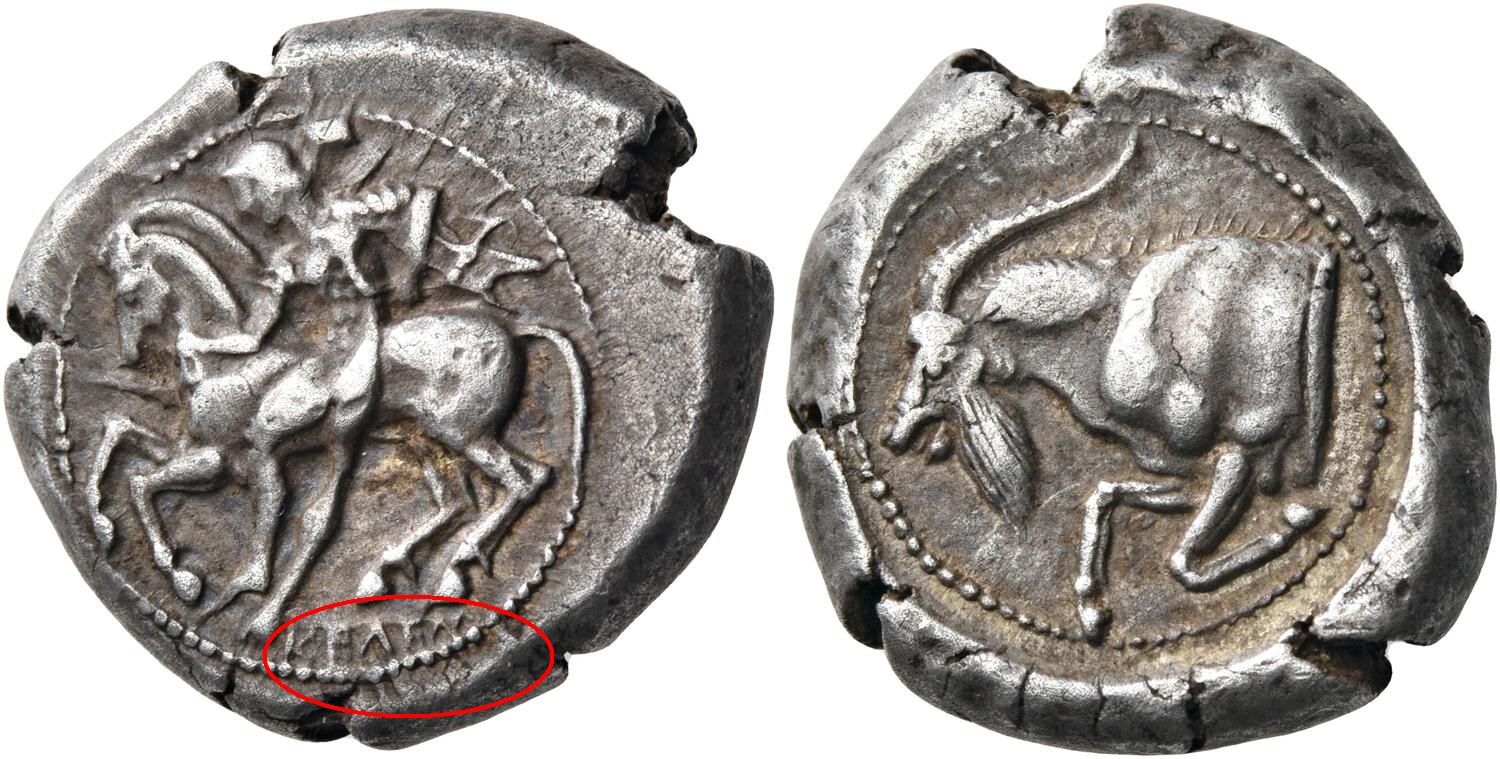
Type 1.3a, Specimen 1 (Ref. No. KE1005). Obverse and reverse dies O2/R3.
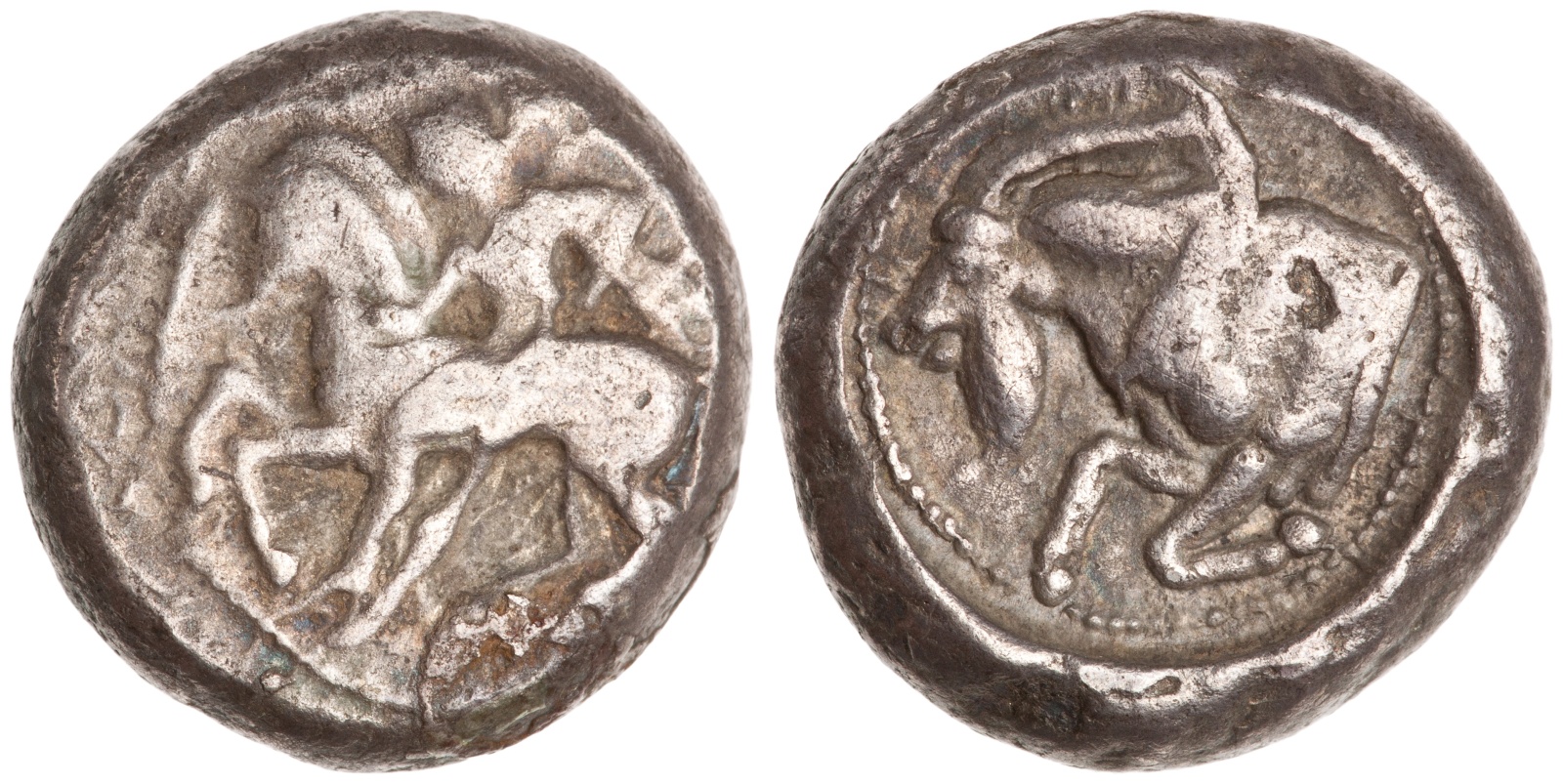
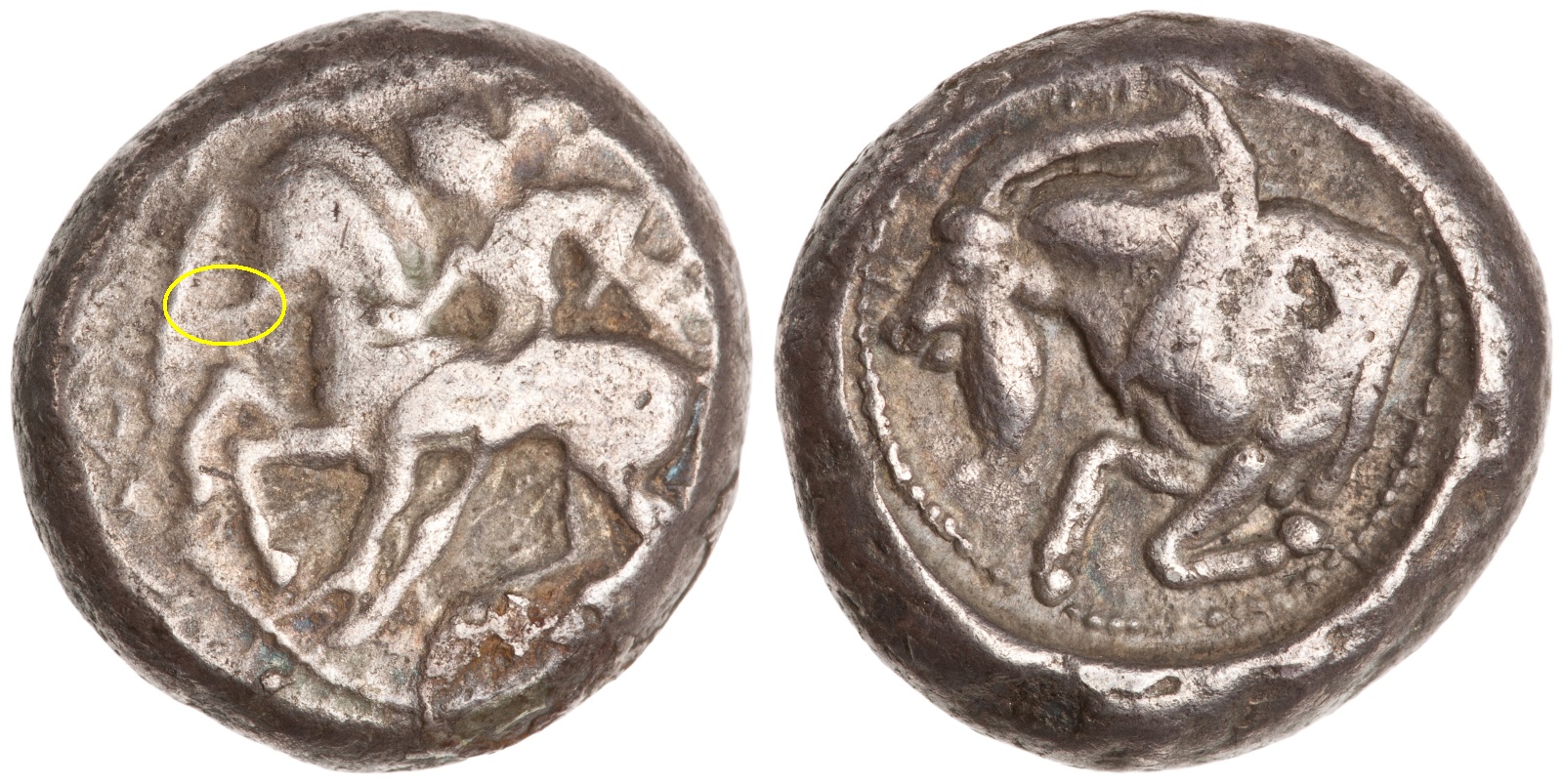
Type 1.3b, Specimen 1 (Ref. No. KE1006). Obverse and reverse dies O2b/R5.
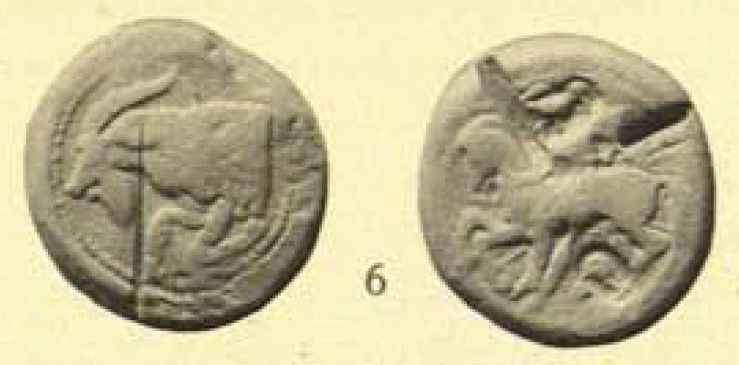
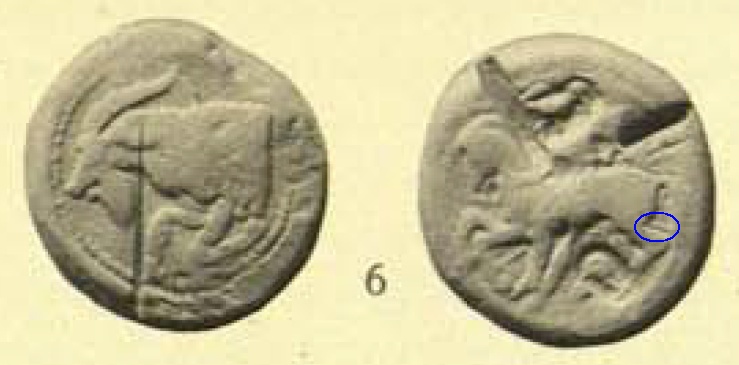
Type 1.3b, Specimen 2 (Ref. No. KE1007). Obverse and reverse dies O2b/R5 (?).
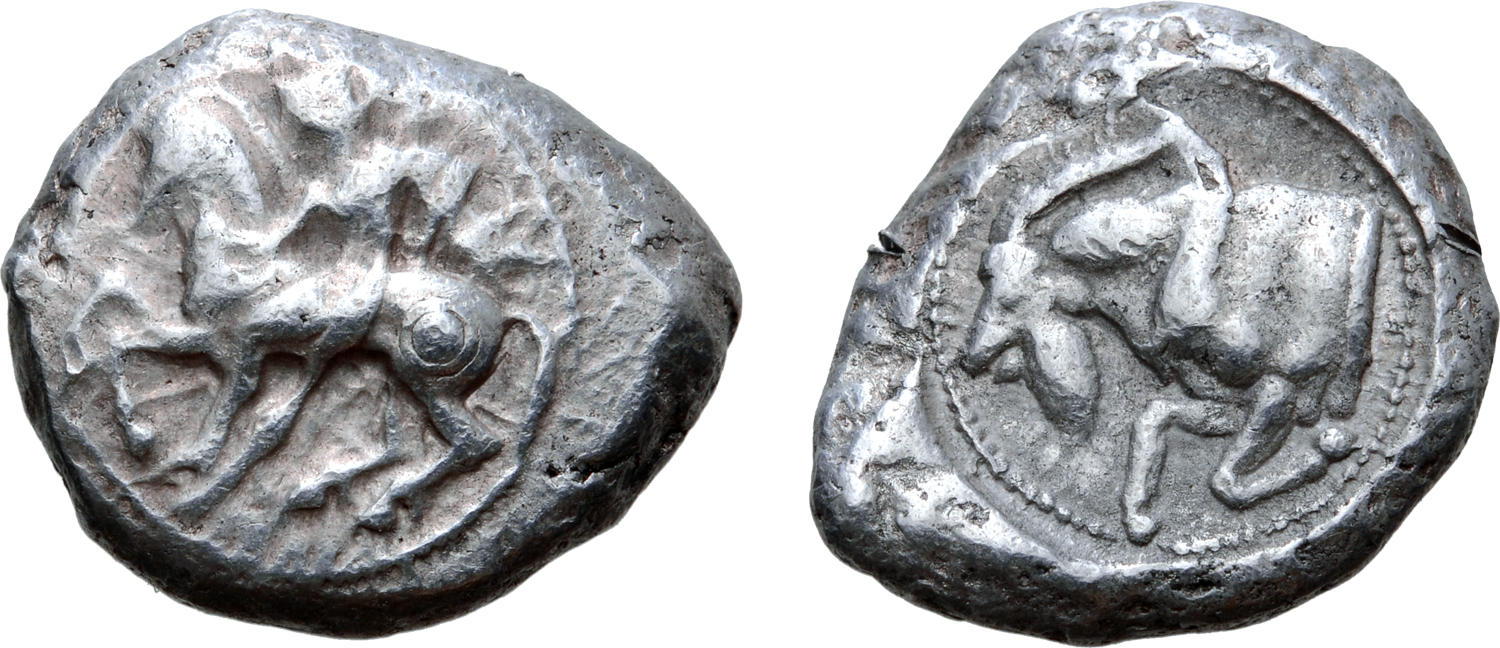
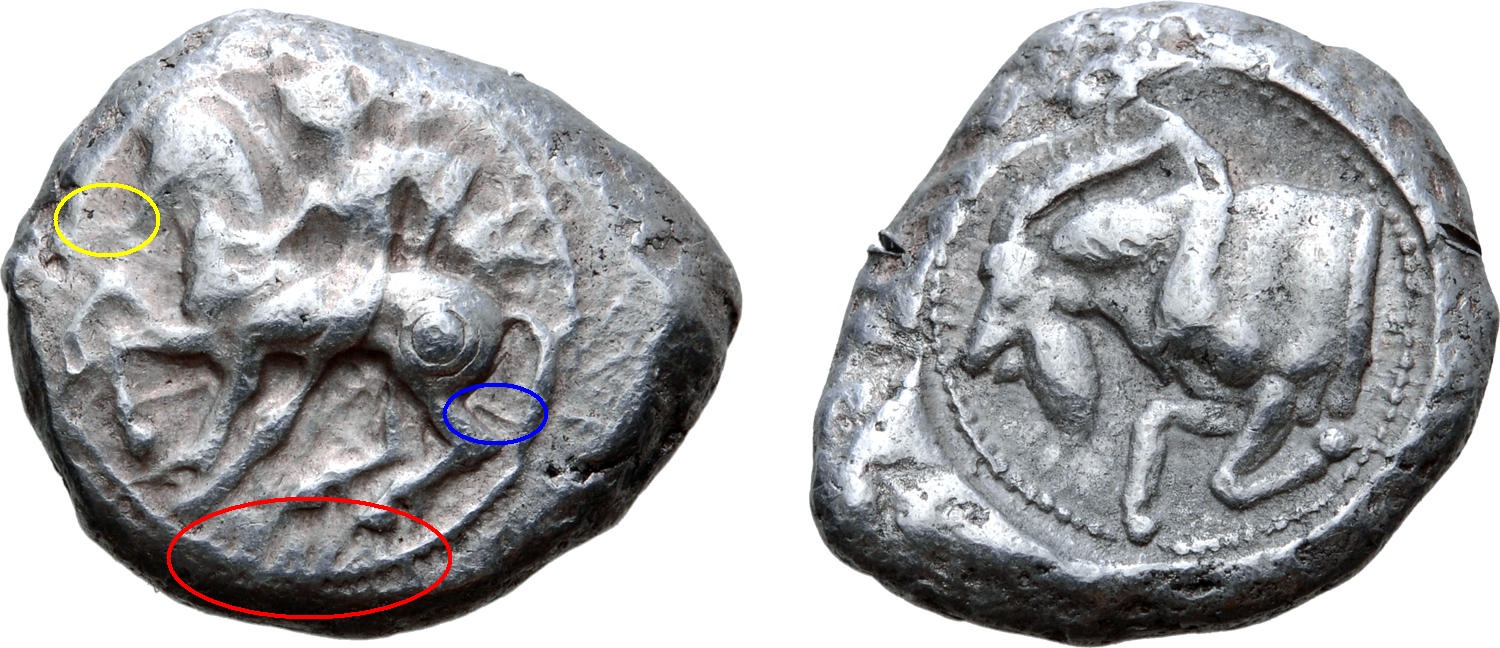
Type 1.3b, Specimen 3 (Ref. No. KE1008). Obverse and reverse dies O2b/R5.
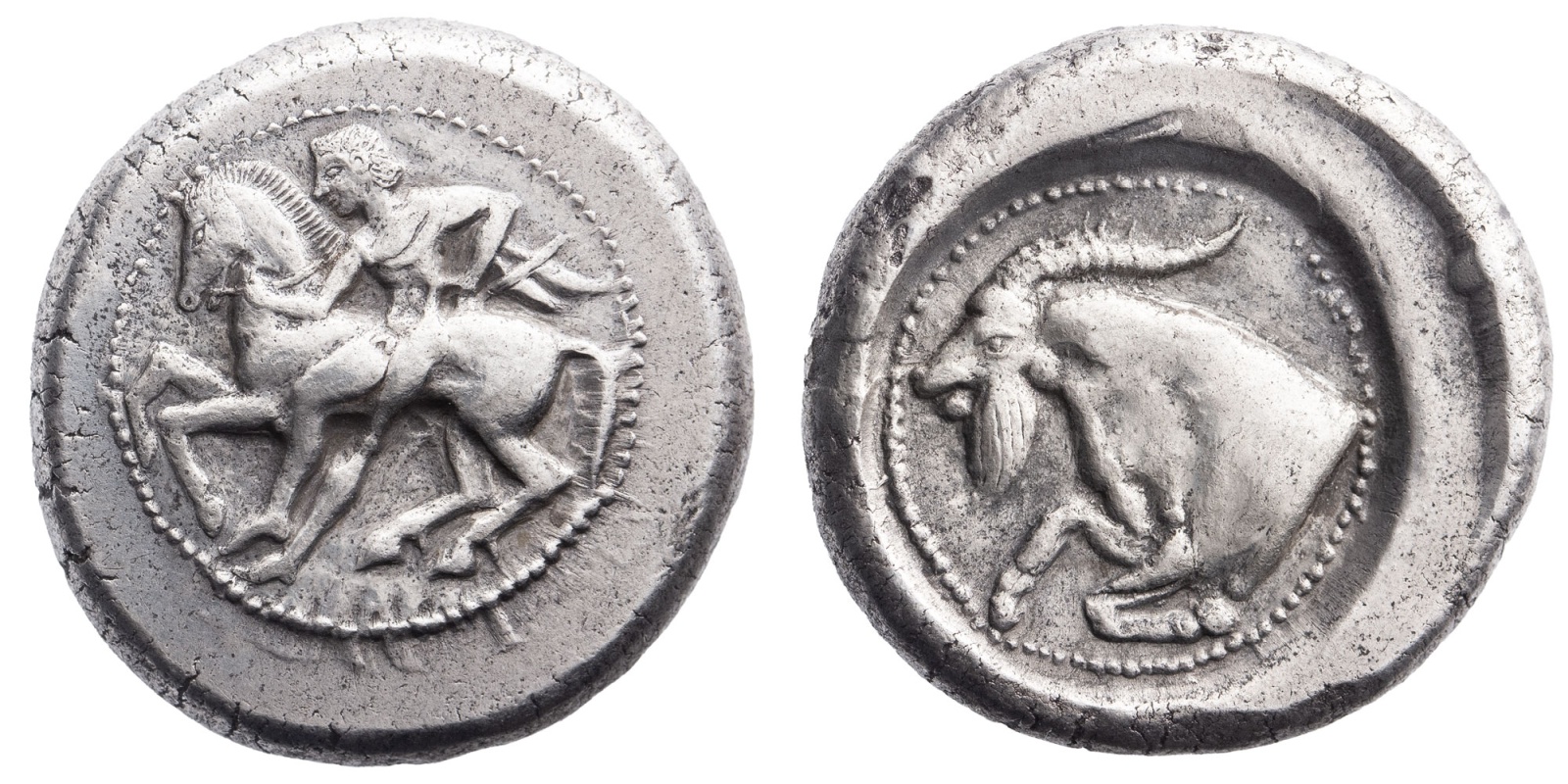
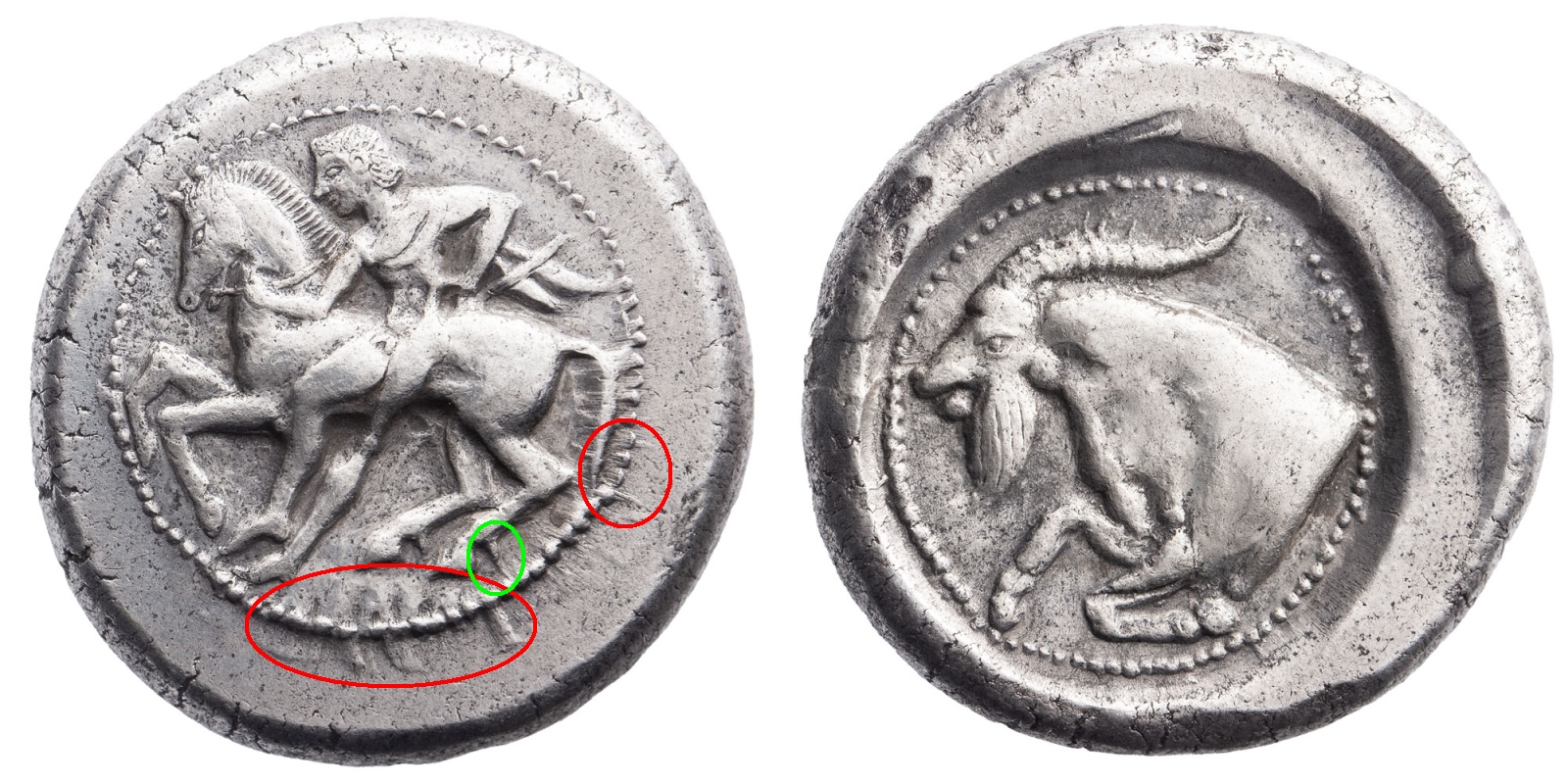
Type 1.3b, Specimen 4 (Ref. No. KE1009). Obverse and reverse dies O2b/R4.
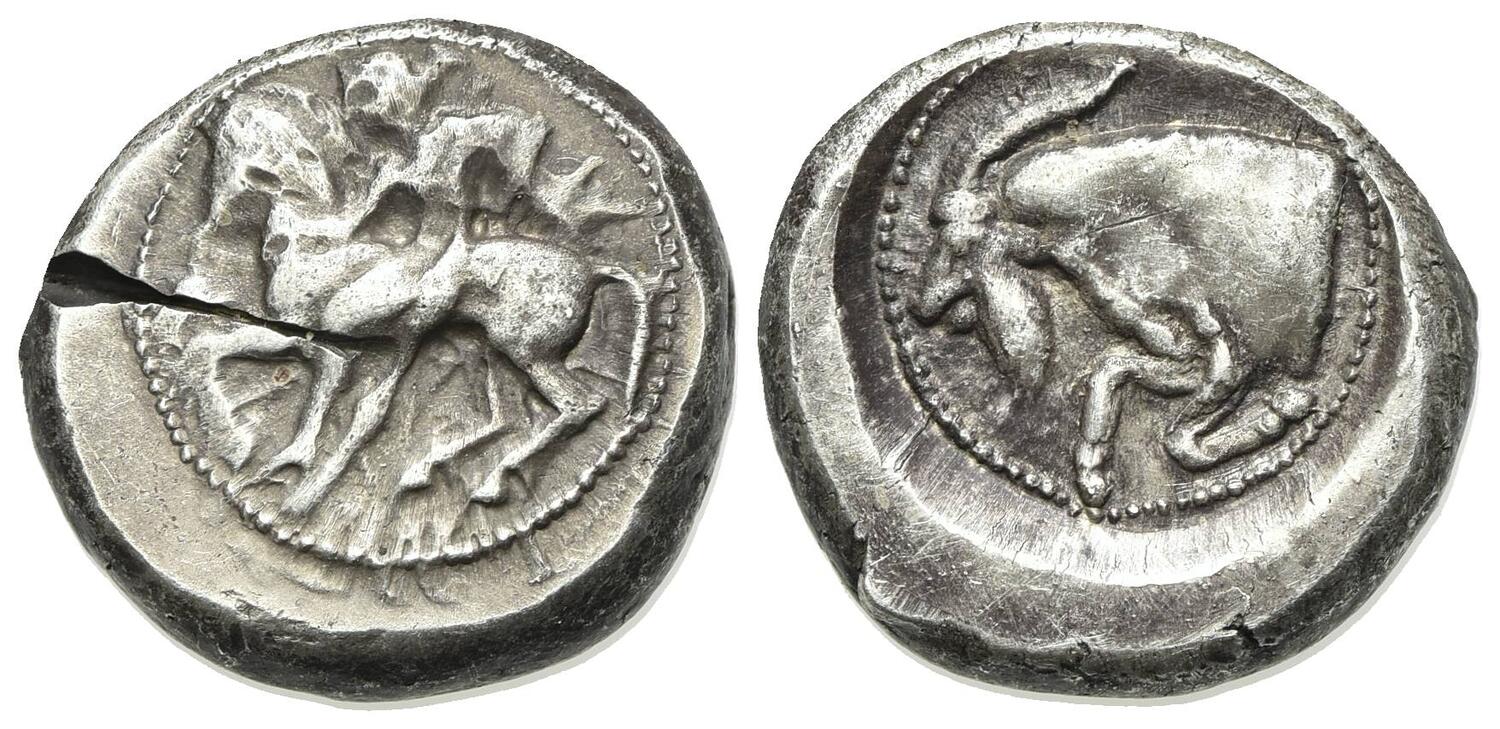
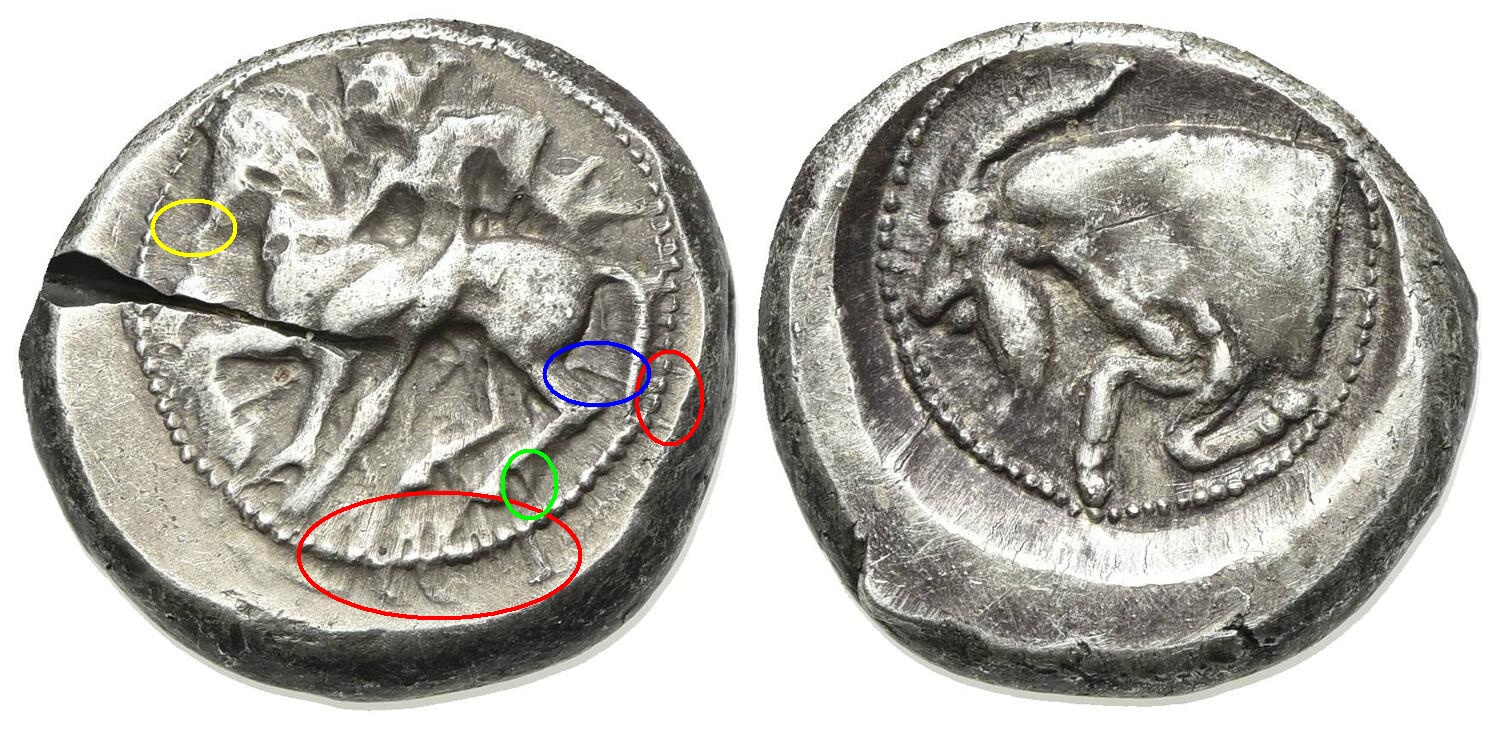
Type 1.3b, Specimen 5 (Ref. No. KE1010). Obverse and reverse dies O2b/R4.
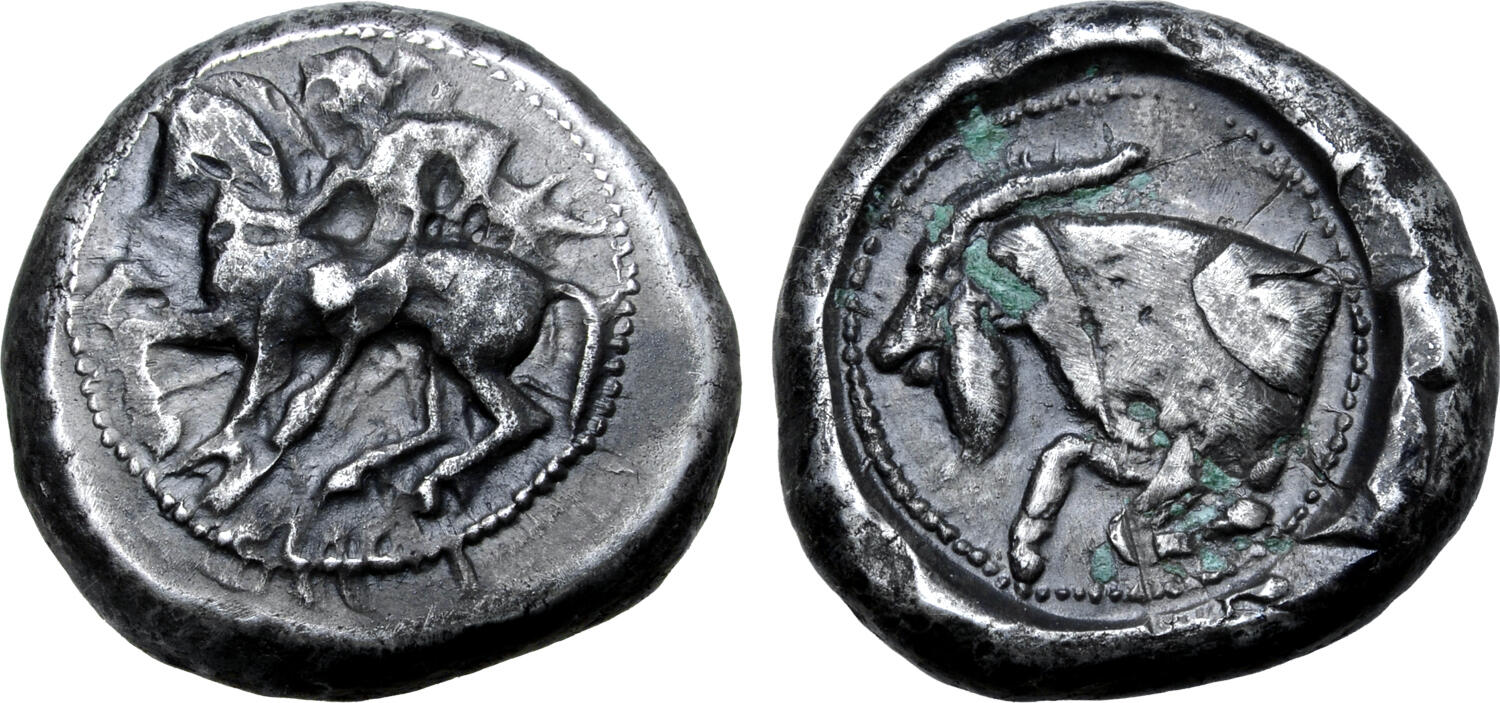
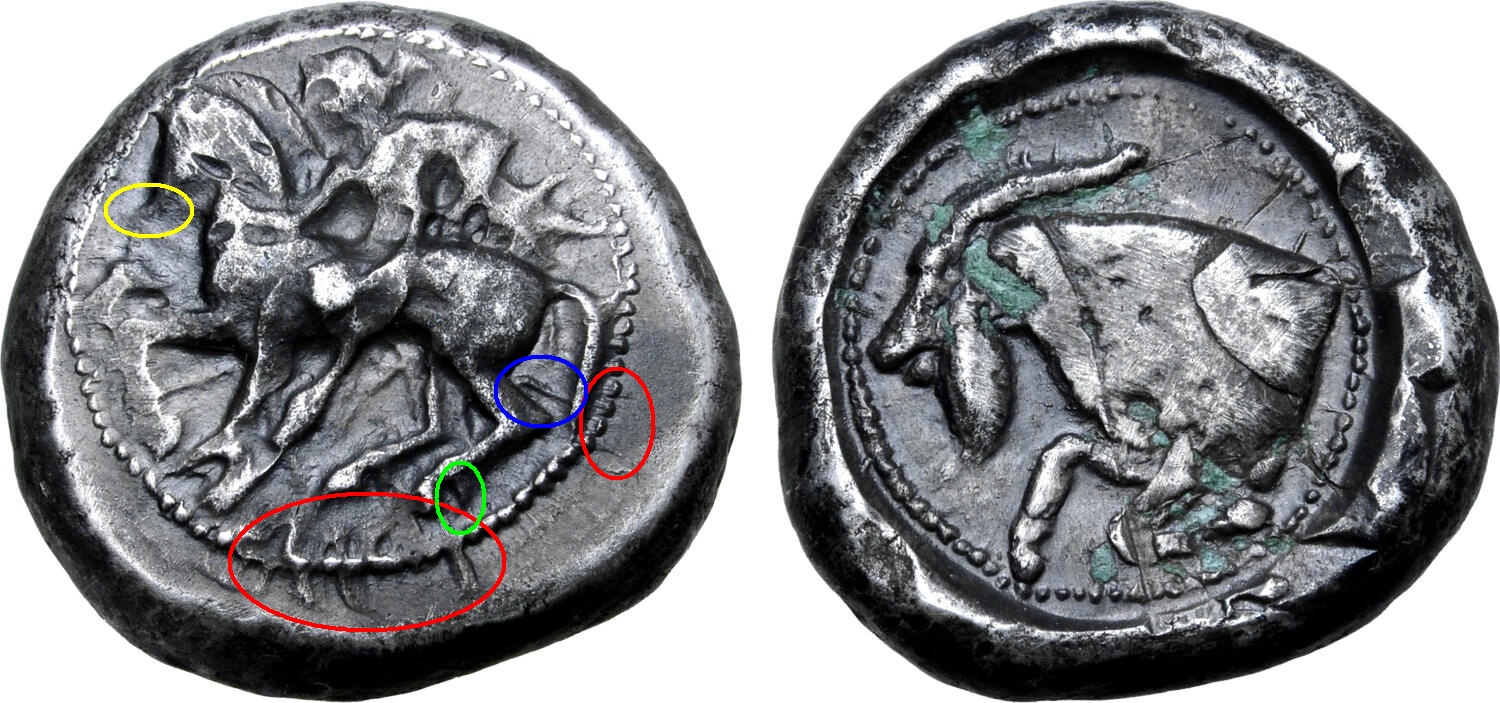
Type 1.3b, Specimen 6 (Ref. No. KE1011). Obverse and reverse dies O2b/R4.
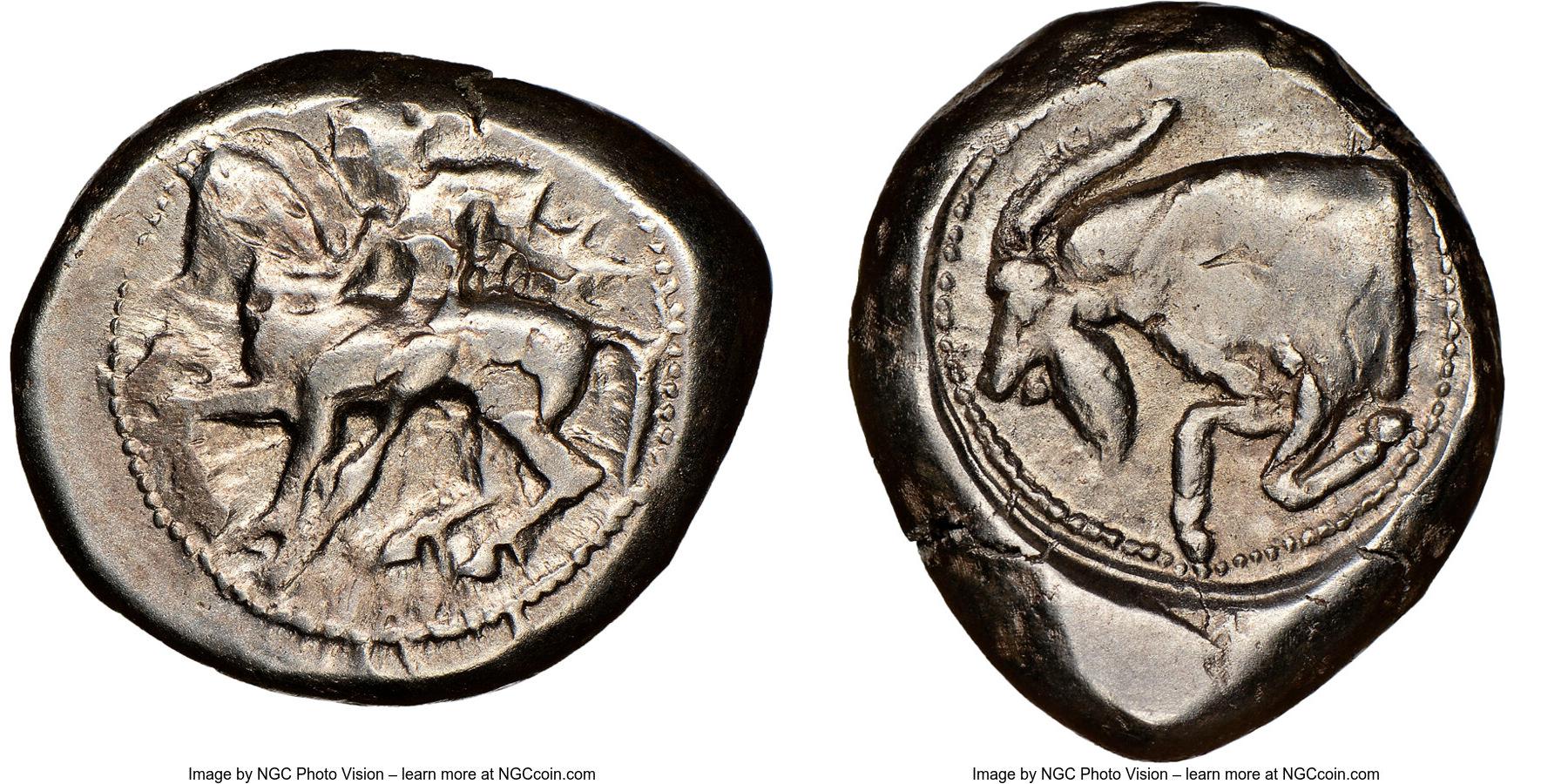
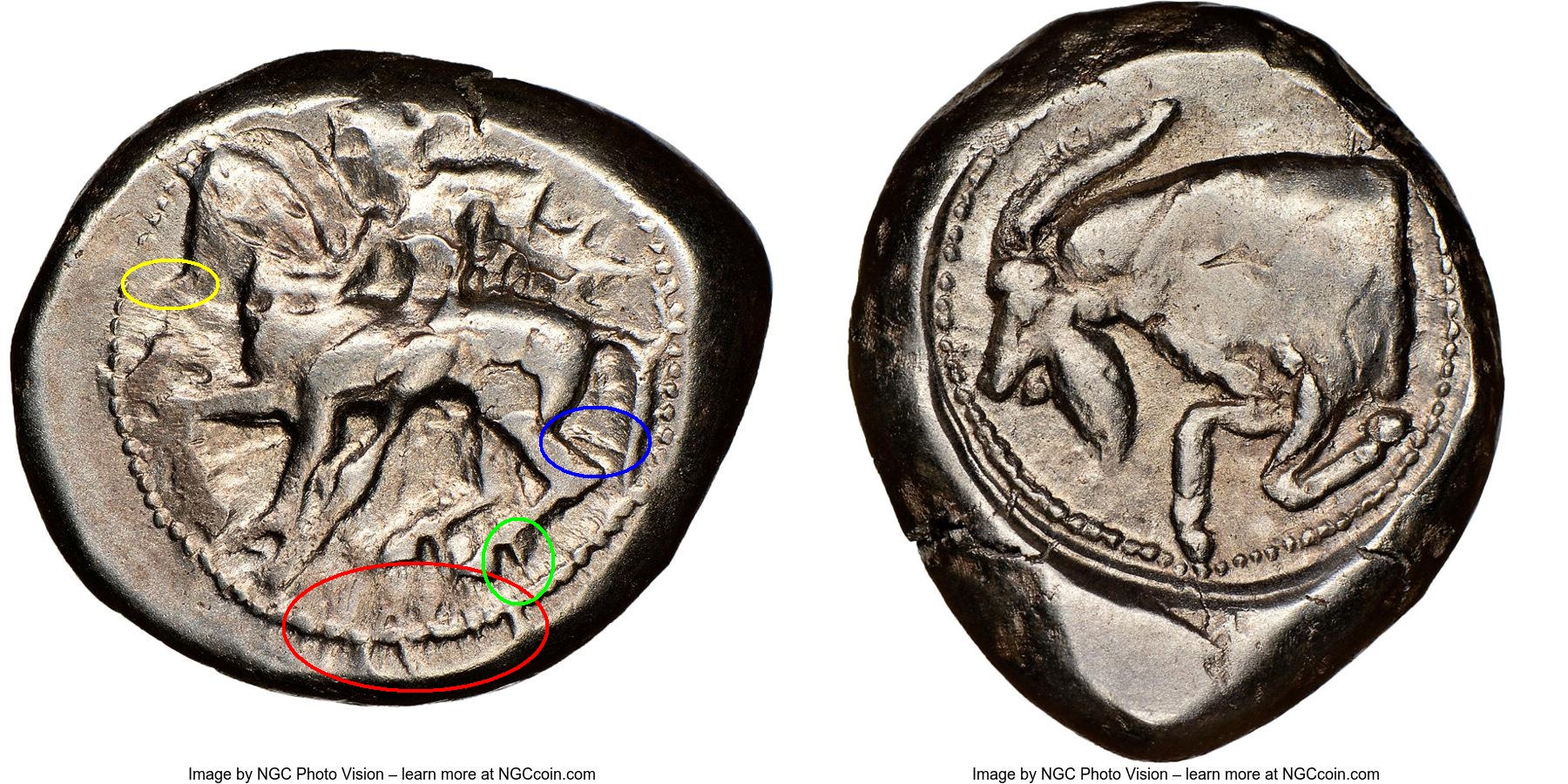
Type 1.3b, Specimen 7 (Ref. No. KE1012). Obverse and reverse dies O2b/R4.
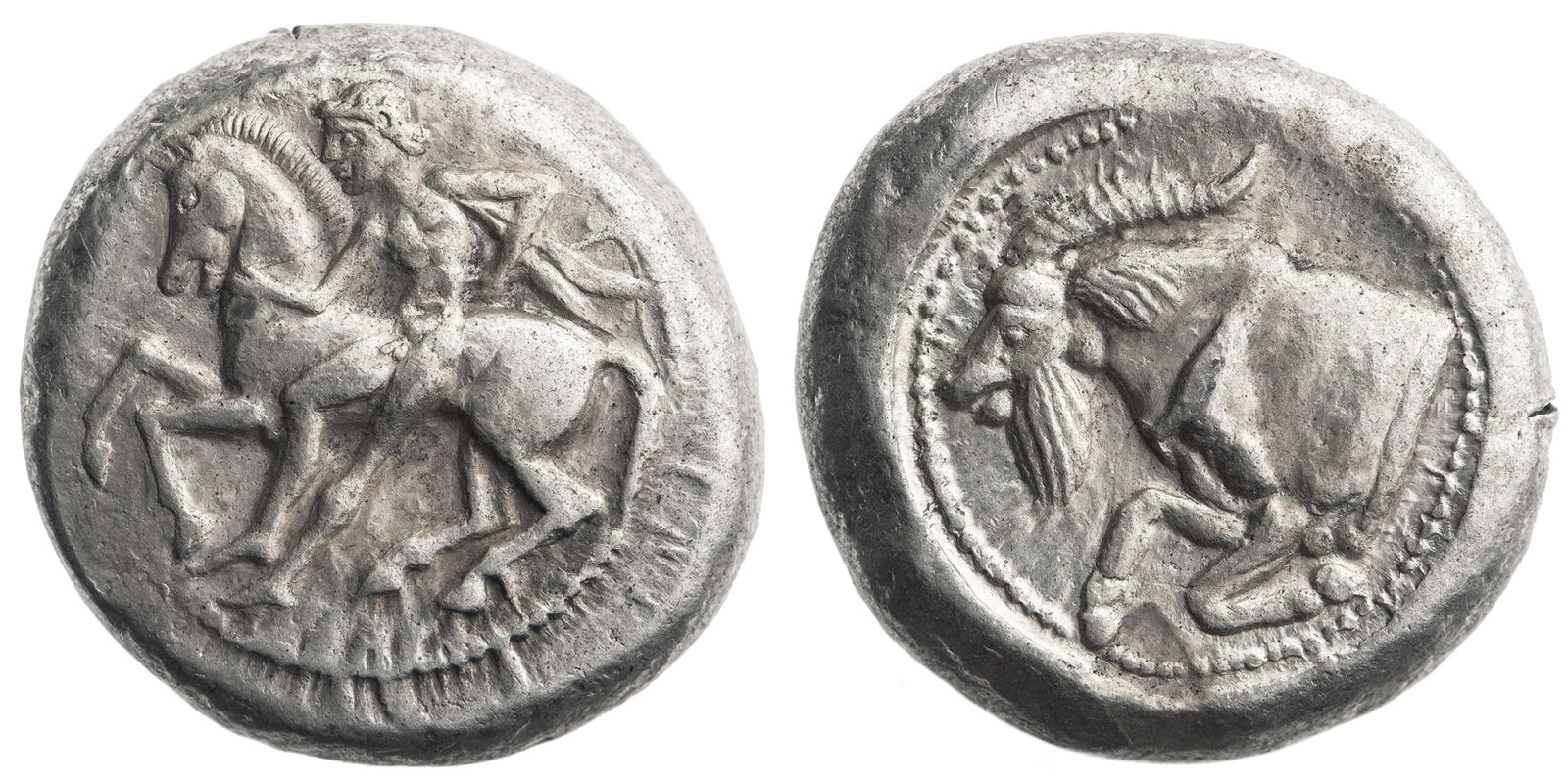
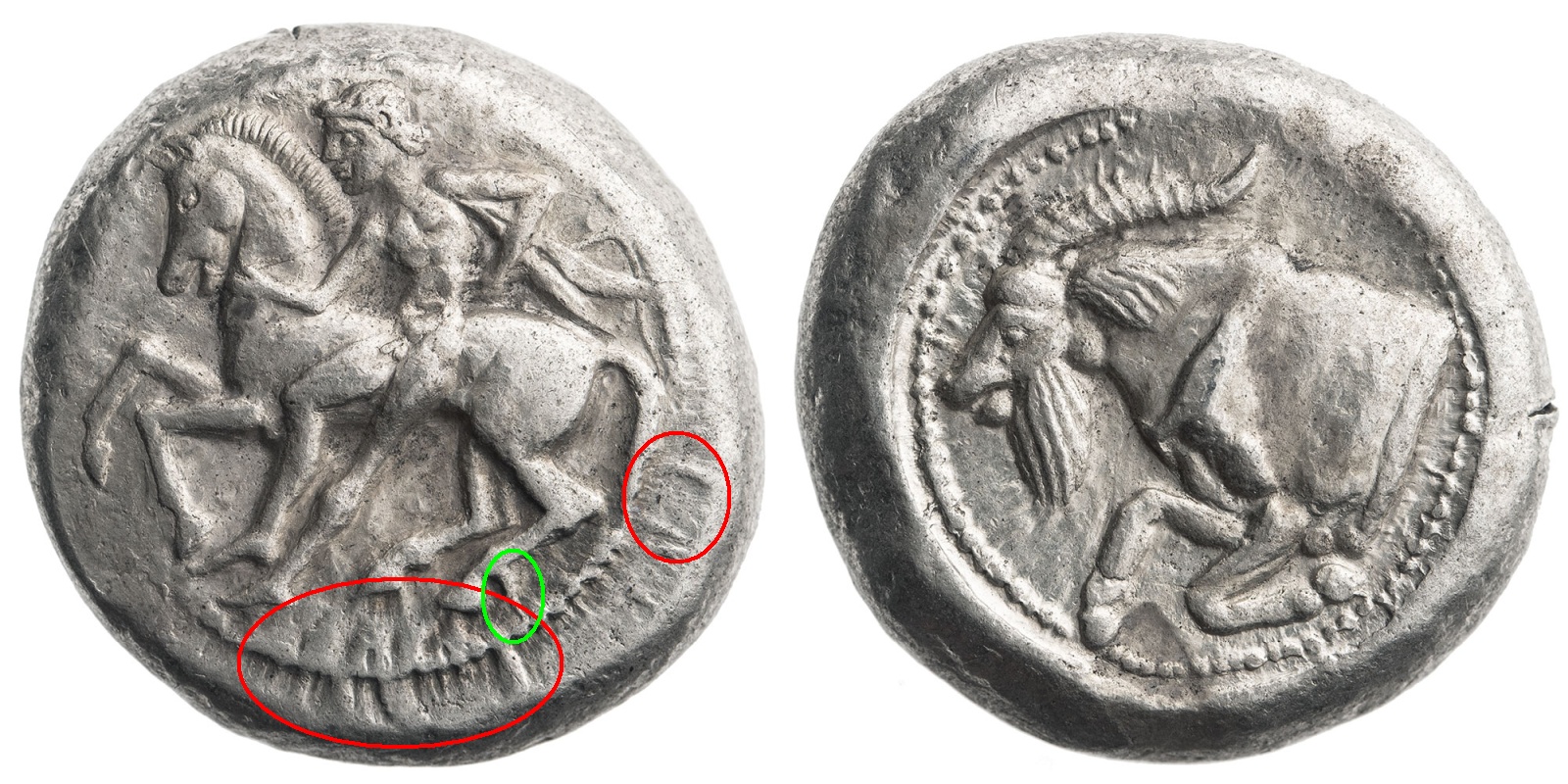
Type 1.3b, Specimen 8 (Ref. No. KE1013). Obverse and reverse dies O2c/R6.
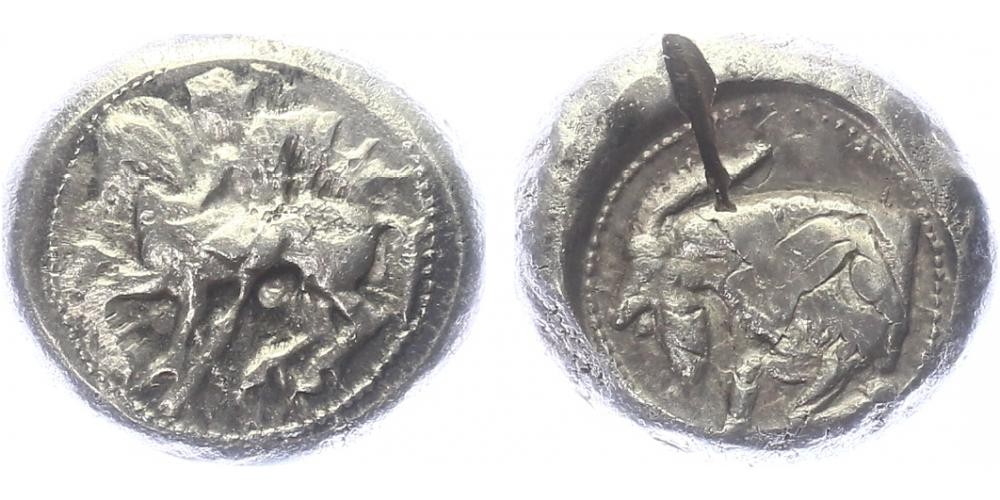
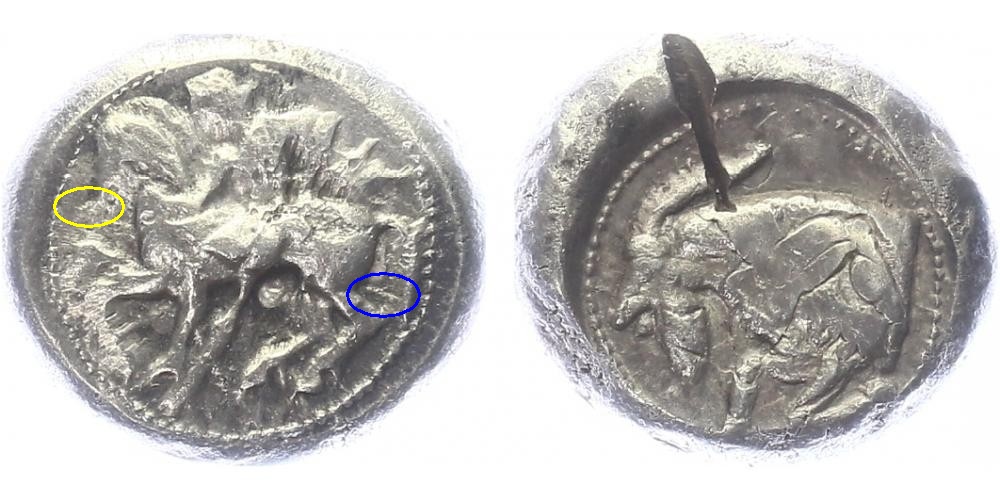
Type 1.3b, Specimen 9 (Ref. No. KE1014). Obverse and reverse dies O2b/R4 (?).
9 May 2025 – 25 September 2026