AR Obols
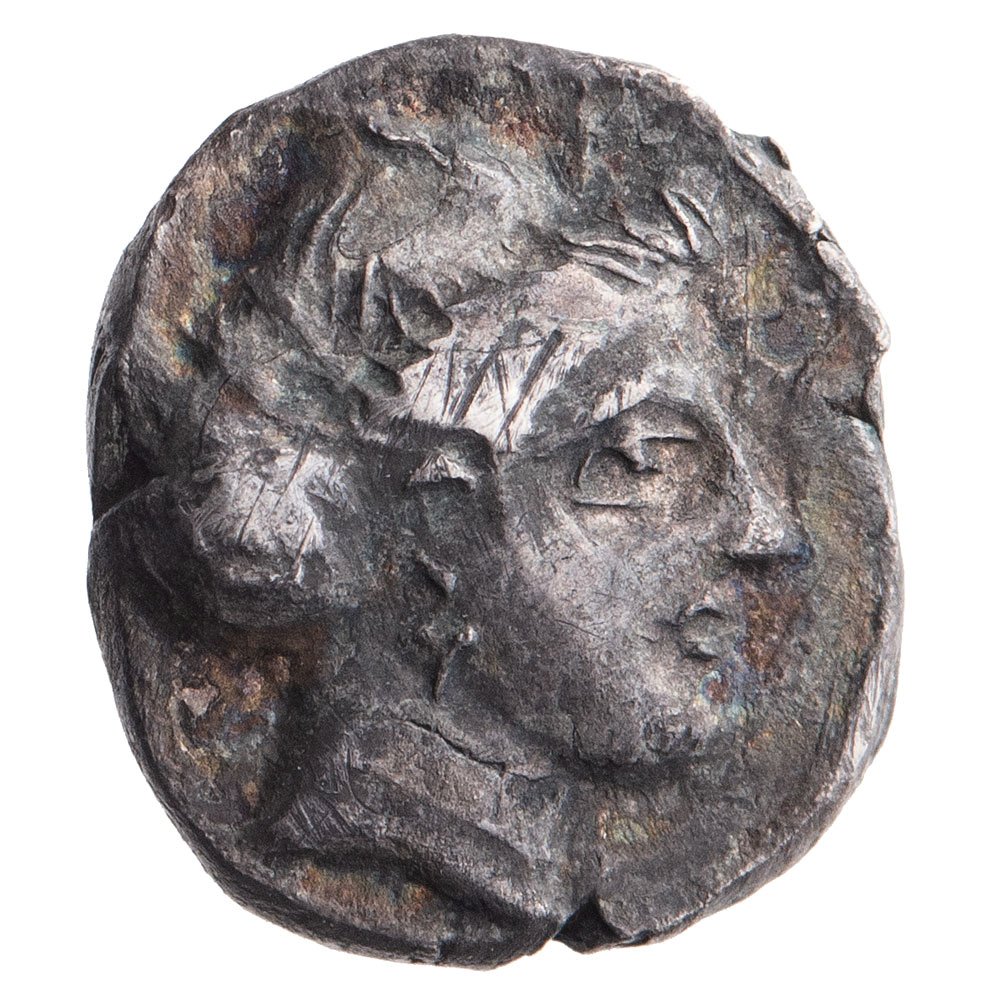
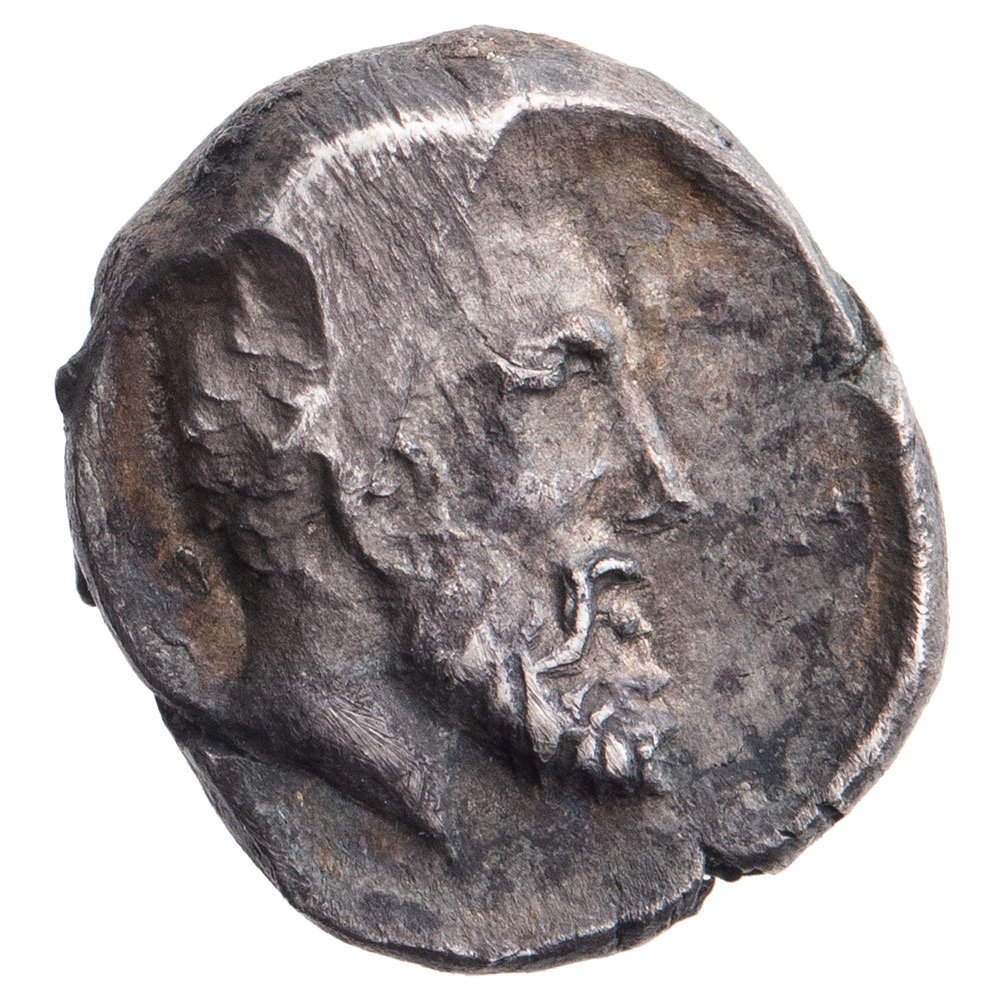
Identifier SAM-AR-01
| Denomination: | AR Obol |
| Period: | 372–333/2 BC |
| Mint: | Samaria |
Detail
| Weight: | 0.53 g | |
| Diameter: | 7–8 mm | |
| Obverse: | Head of Aphrodite right, her hair bound in a sphendone, wearing an earring and a necklace; dotted border (off the flan). | |
| Reverse: | Bearded male head right. | |
| Die axis: | 45° | |
| References: | Meshorer & Qedar 1999, 186; Numismatica Ars Classica NAC AG, Auction 64 (17 May 2012), Lot 1670 (acsearch.info URL) | |
| Provenance: | Nomos AG, Obolos Web Auction 33 (11 September 2024), Lot 562 (acsearch.info URL). Ex The Collection of Jonathan H. Kagan. Ex Herbert Kreindler. |
|
| Remarks: | (1) | According to Meshorer & Qedar 1999, p. 71, Samarian coinage began around 372 BC and ended in 333/2 BC. |
| (2) | This coin resembles Nagidos obols of Type 5.5, which depict the head of Aphrodite wearing a sphendone on the obverse and the head of Dionysos on the reverse. At the same time, the head of Aphrodite is stylistically similar to that on Nagidos staters of Type 1.5. However, the hair of the male head on the reverse differs from that of Dionysos on Nagidos coins, and the absence of an ivy wreath prevents the head from being securely identified as Dionysos. Nevertheless, Nagidos coinage very likely inspired this Samarian type, and the female head on the obverse most likely represents Aphrodite (Meshorer & Qedar 1999, p. 41, also favour this interpretation). | |
| (3) | The type catalogued as Meshorer & Qedar 1999, 93, is similar to this coin, but the male head faces left, and the Aramaic inscription ŠMR appears to the left of Aphrodite’s head. This is an abbreviated form of ŠMRYN = Samaria (ibid., pp. 19–20). A male head very similar to that on type 186 is also depicted on type 188, but the other side of that type shows the bearded head of a satrap wearing a kyrbasia. | |
| (4) |
This coin type may also have been minted as a hemiobol: Numismatica Ars Classica NAC AG, Auction 64 (17 May 2012), Lot 1671 (acsearch.info URL) However, the specimen’s low weight may instead result from metal loss caused by corrosion. |
|
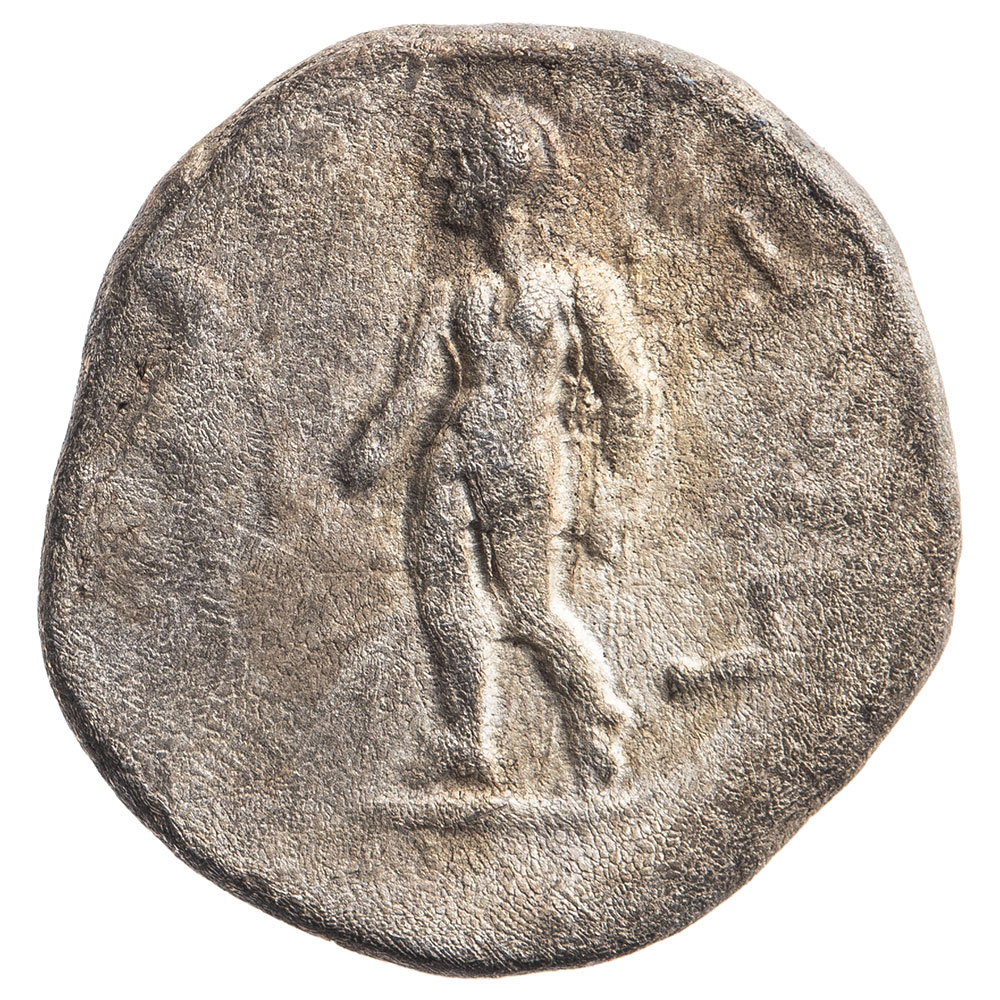
Identifier UNC-AR-02
| Denomination: | AR Obol |
| Period: | c. 4th century BC |
| Mint: | uncertain mint in Cilicia or a nearby area |
Detail
| Weight: | 0.63 g |
| Diameter: | 10–10 mm |
| Obverse: | Bull butting right on exergual line; above, uncertain letter; dotted border. |
| Reverse: | Male figure standing left on exergual line; in left field, uncertain object or letter; in right field, uncertain letters. |
| Die axis: | -165° |
| References: | Not published in the standard references; several similar specimens have appeared on the market (see below). |
| Provenance: | Dr. Reinhard Fischer Auktionen, Fixed Price List (17 June 2022). |
| Remarks: | |
| A number of specimens of this obol type are known, but their attribution is uncertain. They may originate in Cilicia or elsewhere in the eastern Mediterranean, especially Philistia or Samaria. The legends on the obverse and reverse appear to be in Aramaic script. However, their interpretation is unclear because they are rather carelessly engraved and some letters may be retrograde. The type was probably produced locally by a minor city. Three variants can be distinguished among the specimens known to date: | |
|
|
| The specimen in this collection belongs to variant 2. Other known specimens (the list is not exhaustive; the first number indicates the variant): | |
| 1.1 | Classical Numismatic Group, Electronic Auction 397 (17 May 2017), Lot 194 (acsearch.info URL). 0.62 g. |
| 1.2 | Savoca Coins, 4th Blue Auction (29 December 2017), Lot 513 (acsearch.info URL). 0.59 g. Ex Savoca Coins, Live Online Auction 10 (16 October 2016), Lot 337 (acsearch.info URL). |
| 1.3 | Saint Paul Antiques, Auction 16 (31 March 2018), Lot 65 (acsearch.info URL). 0.60 g. |
| 1.4 | Nomos AG, Obolos Web Auction 20 (3 October 2021), Lot 817 (acsearch.info URL). 0.56 g. |
| 1.5 | Nomos AG, Obolos Web Auction 21 (2 January 2022), Lot 517 (acsearch.info URL). 0.67 g. |
| 1.6 | Biga Numismatics, Online Auction 22 (2 September 2023), Lot 176 (acsearch.info URL). 0.67 g. |
| 1.7 | Astarte, Web Auction 3 (22 February 2022), Lot 155 (acsearch.info URL). 0.62 g. |
| 2.1 | Classical Numismatic Group, Electronic Auction 495 (7 July 2021), Lot 231 (acsearch.info URL). 0.65 g. Ex Classical Numismatic Group, Electronic Auction 462 (26 February 2020), Lot 183 (acsearch.info URL). |
| 2.2 | Leu Numismatik, Web Auction 19 (26 February 2022), Lot 1589 (acsearch.info URL). 0.65 g. |
| 2.3 | Classical Numismatic Group, Electronic Auction 595 (10 September 2025), Lot 218 (acsearch.info URL). 0.61 g. Ex Oslo Myntgalleri A/S, Auction 37 (25 November 2023), Lot 1641. |
| 2.4 | Nomos AG, Obolos Web Auction 35 (15 December 2024), Lot 1376 (acsearch.info URL). 0.62 g. |
| 3.1 | Numismatik Naumann, Auction 38 (6 December 2015), Lot 198 (acsearch.info URL). 0.55 g. |
| 3.2 | Roma Numismatics Limited, E-Sale 25 (27 February 2016), Lot 76 (acsearch.info URL). 0.67 g. |
| 3.3 | Savoca Coins, Live Online Auction 7 (28 February 2016), Lot 355 (acsearch.info URL). 0.73 g. |
| 3.4 | Savoca Coins, Live Online Auction 15 (28 May 2017), Lot 308 (acsearch.info URL). 0.65 g. |
| 3.5 | Classical Numismatic Group, Electronic Auction 398 (31 May 2017), Lot 299 (acsearch.info URL). 0.67 g. |
| 3.6 | Numismatik Naumann, Auction 77 (5 May 2019), Lot 107 (acsearch.info URL). 0.62 g. |
| 3.7 | Themis Numismatics, Auction 7 (27 June 2020), Lot 262 (acsearch.info URL). 0.60 g. |
| 3.8 | Aquila Numismatics (Fa. Online-Münzhandel), Auction 4 (19–20 August 2022), Lot 202 (acsearch.info URL). 0.73 g. |
| 3.9 | Aquila Numismatics (Fa. Online-Münzhandel), Auction 7 (4 December 2022), Lot 360 (acsearch.info URL). 0.70 g. |
| 3.10 | Victoria Numismatics UG, Auction 4 (20 December 2022), Lot 105 (biddr.com URL). 0.68 g. |
| 3.11 | Savoca Coins, 156th Silver Auction (19 February 2023), Lot 113 (acsearch.info URL). 0.58 g. |
| Including the coin in this collection, the average weight is 0.64 g, with a standard deviation of 0.05 g. | |
AR Tetartemorions
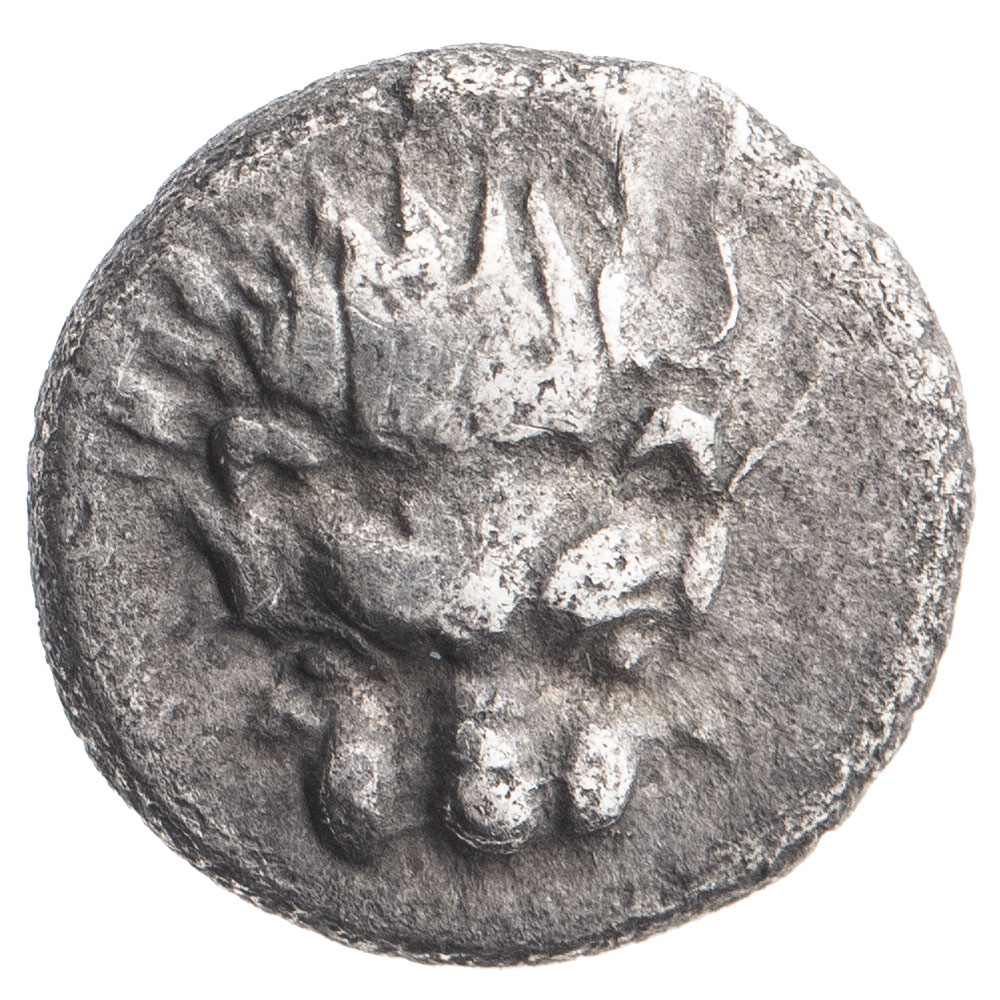
Identifier UNC-AR-01
| Denomination: | AR Tetartemorion |
| Period: | c. 1st half of the 4th century BC |
| Mint: | uncertain mint in Cilicia or a nearby area |
Detail
| Weight: | 0.19 g |
| Diameter: | 5–5 mm |
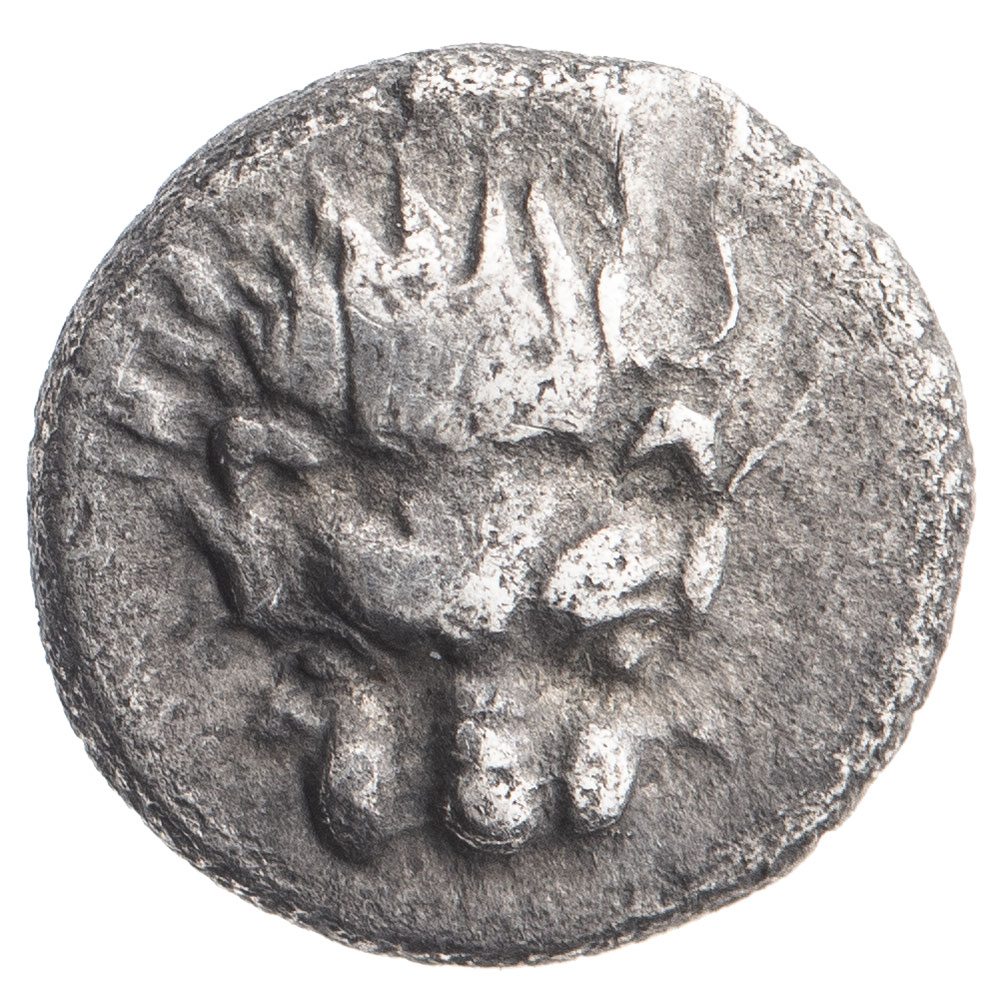
| Obverse: | Lion’s head facing. |
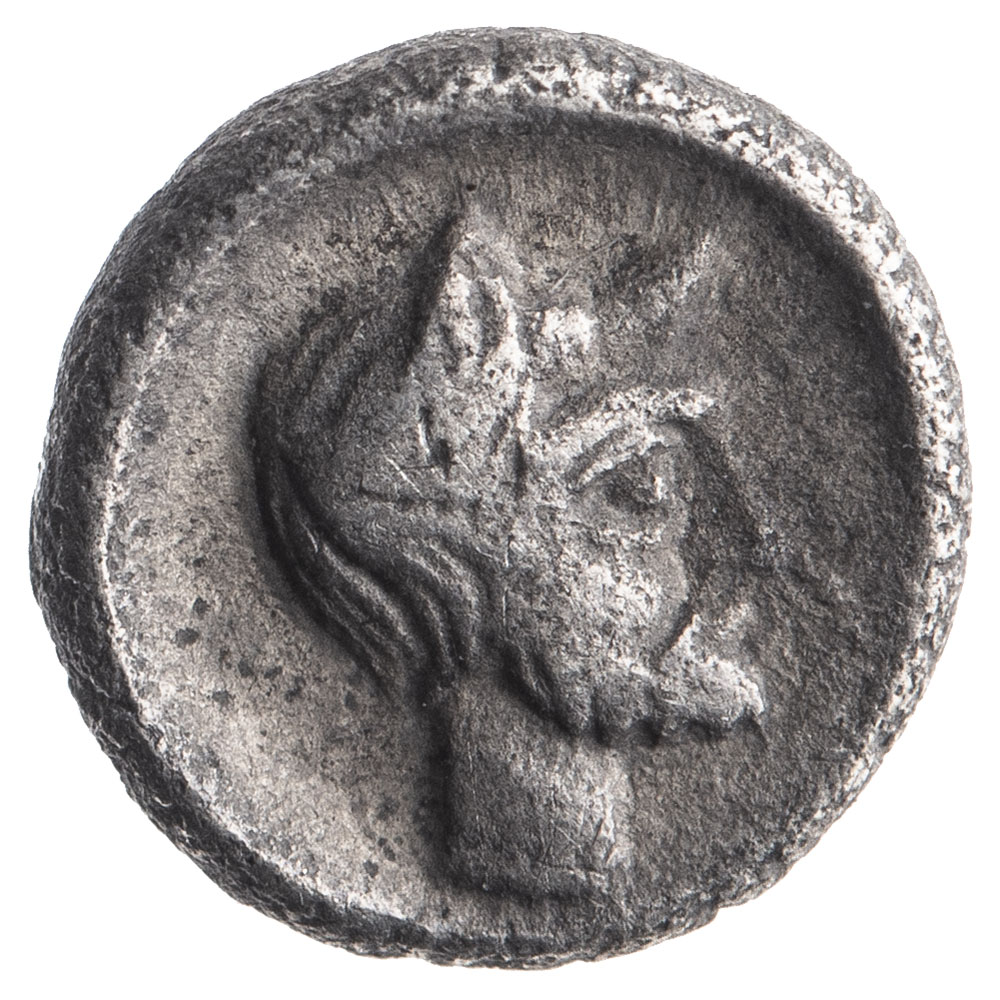
| Reverse: | Bearded head of Pan or of a satyr facing right, with horns and long ears; all within an incuse circle. |
| Die axis: | 110° |
| References: | Troxell & Kagan 1989, p. 277, 8; SNG Levante, 241 |
| Provenance: | Bucephalus Numismatic GmbH, Auction 6 (12 June 2022), Lot 434 (acsearch.info URL). |
| Remarks: | ||
| (1) | According to Troxell & Kagan 1989, p. 275, this coin type appeared on the market together with other previously unknown types of silver hemiobols and tetartemoria from Cilicia and nearby areas in 1984 and 1985. The type can be dated to the 4th century BC on the basis of the circular incuse on the reverse, most likely to the 1st half of the century. These silver fractions were probably intended for small everyday transactions among the local population. The mint was probably located in Cilicia, although another area of southern Asia Minor, such as Caria, cannot be ruled out (ibid., p. 281). Heads of Pan or satyrs also appear on Nagidos obols and bronze coins, but their style differs (see Types 5.9, 5.10, and 8.1 in the Nagidos section of the Coin Catalogue). | |
| Other known specimens (the list is not exhaustive): | ||
| 1 | Troxell & Kagan 1989, p. 277, 8a. Weight unknown. | |
| 2 | Troxell & Kagan 1989, p. 277, 8b. 0.18 g. | |
| 3 | Troxell & Kagan 1989, p. 277, 8c. 0.20 g. | |
| 4 | Troxell & Kagan 1989, p. 277, 8d. 0.16 g. | |
| 5 | SNG Levante, 241. 0.17 g. | |
| 6 | Classical Numismatic Group, Electronic Auction 286 (5 September 2012), Lot 151 (acsearch.info URL). 0.15 g (5 mm, 4 h). | |
| 7 | Gerhard Hirsch Nachfolger, Auction 284 (26 September 2012), Lot 2456 (acsearch.info URL). 0.19 g. | |
| 8 | Fritz Rudolf Künker GmbH & Co. KG, Auction 216 (8 October 2012), Lot 469 (acsearch.info URL). 0.15 g. | |
| 9 | Gerhard Hirsch Nachfolger, Auction 287 (7 February 2013), Lot 2002 (acsearch.info URL). 0.18 g. | |
| 10 | Gerhard Hirsch Nachfolger, Auction 306 (12 February 2015), Lot 1869 (acsearch.info URL). 0.15 g. Ex Gerhard Hirsch Nachfolger, Auction 296 (13 February 2014), Lot 1901 (acsearch.info URL). |
|
| 11 | Bucephalus Numismatic GmbH, Auction 21 (23 June 2023), Lot 232 (acsearch.info URL). 0.17 g (5.4 mm). | |
| 12 | Nomos AG, Auction 29 (5 November 2023), Lot 888 (acsearch.info URL). 0.19 g. Ex The “Collection sans Pareille” of Ancient Greek Fractions, acquired in 1983. |
|
| 13 | Shanna Schmidt Numismatics Inc., Fixed Price List (accessed 18 January 2024). 0.19 g (6 mm, 3 h). | |
| Including the coin in this collection, the average weight is 0.17 g, with a standard deviation of 0.02 g. | ||
| (2) | There is also a very similar type on which the lion’s head faces right rather than forwards. Examples: | |
| 1 | Tauler & Fau Subastas, Auction 167 (23 February 2026), Lot 40 (acsearch.info URL). 0.17 g. | |
| 2 | Gorny & Mosch Giessener Münzhandlung, Auction 317 (9 March 2026), Lot 268 (acsearch.info URL). 0.17 g (5 mm). | |
| Both of these coins weigh 0.17 g, the same as the average weight of specimens with a facing lion’s head. | ||
19 September 2021 – 12 September 2026